

M2P Fintech
Fintech is evolving every day. That's why you need our newsletter! Get the latest fintech news, views, insights, directly to your inbox every fortnight for FREE!
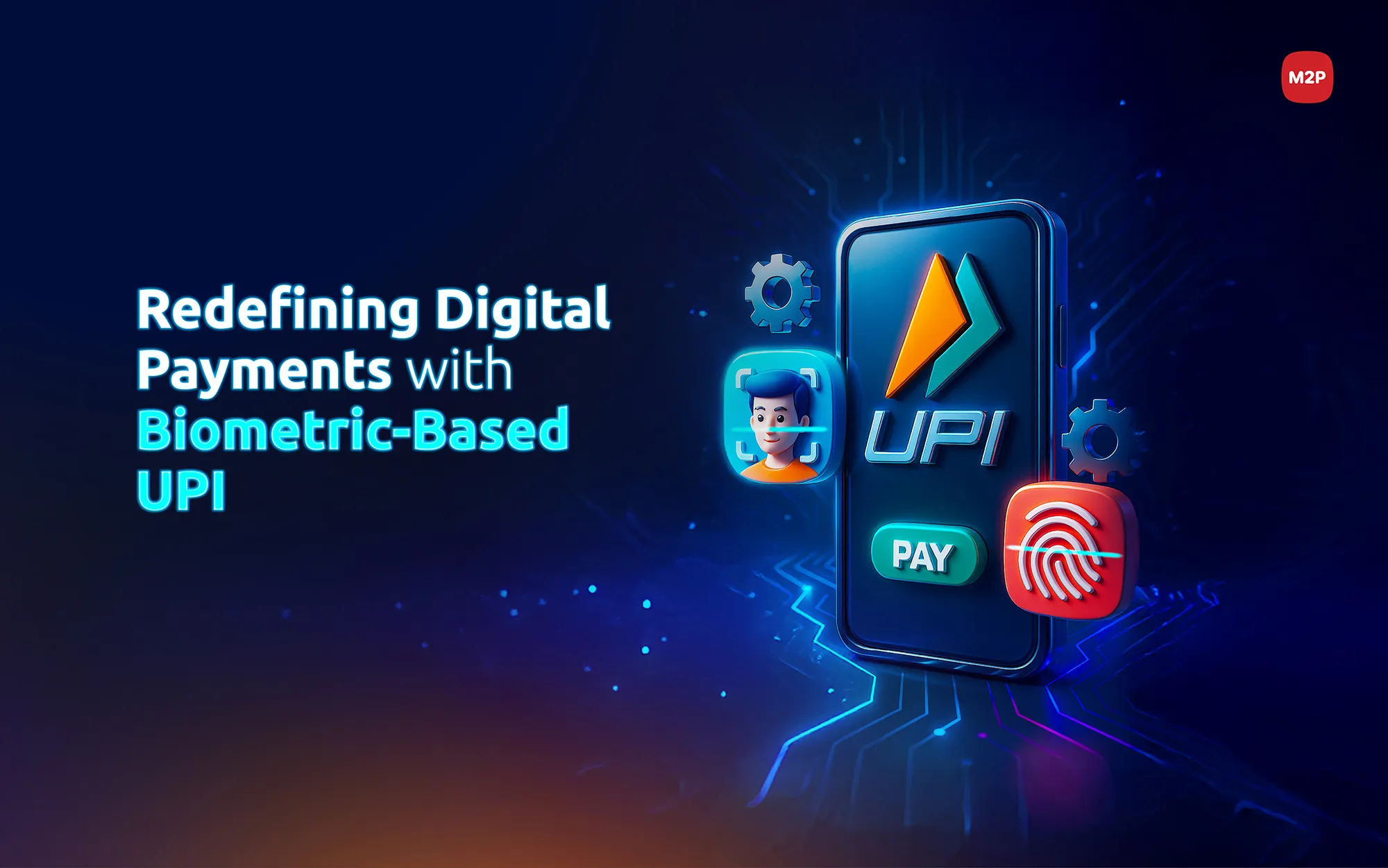
UPI has evolved far beyond a convenience; it has become the foundational rail of India’s digital economy. From street vendors accepting QR payments to large enterprises moving high-value remittances, UPI now underpins everyday commerce at a massive scale. In June 2025 alone, the platform processed 18.39 billion transactions worth ₹24.03 lakh crore, a testament to the trust, ubiquity, and resilience it has built across the country.
With daily transaction volumes frequently crossing 600 million, UPI now operates at an unprecedented reach. Even marginal improvements in security, speed, or accessibility can unlock outsized gains. These improvements help reduce fraud, improve transaction success rates, expand financial access, and drive broader economic efficiency. At this magnitude, authentication is no longer a backend mechanism; it is a critical determinant of user experience, trust, and system-wide stability.
Recognizing this inflection point, the Department of Financial Services (DFS), Ministry of Finance, announced a landmark set of initiatives at the Global Fintech Fest (GFF) 2025. At the center of this announcement are three transformative digital features for UPI, led by on-device biometric authentication. Together, they aim to make UPI payments as intuitive as unlocking a smartphone, while continuing to uphold the robust security and regulatory standards that have defined India’s payments ecosystem.
This blog explores these new capabilities in detail and what this shift means for onboarding India’s next half-billion digital users.
Here’s why biometric authentication is set to redefine UPI. Let’s dive in.
As UPI processes billions of transactions each month, the way users authentication has become one of the most critical levers. For years, UPI has relied on a 4–6-digit PIN as its primary authentication mechanism. While this approach has served the ecosystem well, its limitations are becoming increasingly visible at this volume of usage.
Security Risks: PINs can be shared, observed, or stolen through phishing and social engineering, making them vulnerable in high-density or assisted payment environments.
Friction at Volume: Repeated PIN entry adds seconds to every transaction. Given UPI’s massive transaction load, this can lead to failed payments and drop-offs, particularly for low-value, high-frequency use cases like transit or retail.
Barriers to Inclusion: Elderly users, first-time digital adopters, and low-literacy populations often find PIN setup or entry challenging, creating a silent exclusion barrier.
To onboard the next half-billion UPI users, India must rethink authentication mechanisms beyond traditional PINs. This shift shines the spotlight on on-device biometric verification, which offers a powerful blend of security, convenience, and financial inclusion.
On-device biometric authentication using a smartphone’s fingerprint sensor or facial recognition offers a fundamentally different approach to trust and verification.
Stronger, Non-Transferable Security
Biometric credentials are unique to each individual and cannot be shared, guessed, or easily replicated. Biometric data remains securely stored within the device’s secure enclave and is never transmitted during a transaction, significantly reducing exposure risks.
Faster, Frictionless Approvals
With just a touch or glance, authentication becomes nearly instantaneous. By eliminating manual input, biometrics reduce transaction failures, improve success rates, and create a near-invisible payment experience, especially important as UPI volumes continue to rise.
Designed for Inclusion
Biometric authentication removes the need to remember PINs or navigate complex inputs, making UPI more accessible for elderly users, rural populations, and individuals with limited digital literacy. This simplicity is key to expanding UPI adoption beyond urban and digitally savvy users.
Leveraging native OS technologies (Android/iOS) alongside UIDAI’s secure frameworks, these features are designed to deliver frictionless payment experiences without compromising safety or regulatory compliance. From everyday retail payments to onboarding first-time users, biometric UPI is reshaping how millions interact with digital finance.
The first major upgrade lets users authorize UPI payments using their smartphone’s built-in fingerprint or face recognition, removing the need to manually enter a PIN for eligible transactions and supported devices.
How it works:
Users scan a QR code or initiate a payment as usual
Instead of typing a PIN, they authenticate via Touch ID or Face ID
Authentication occurs entirely on‑device, ensuring biometric data never leaves the secure enclave
Transactions continue to undergo standard bank‑level and NPCI‑mandated security validations
Users | Banks & NBFCs |
Faster, near-instant transactions | Maintain strong control and compliance |
Fewer failed attempts and abandoned payments | Reduce transaction failures and customer support load |
Seamless, intuitive experience for daily payments like groceries, cabs, or utility bills | Enable higher transaction volumes without adding friction |
This feature significantly reduces friction in everyday payment experiences, making digital finance accessible to a broader audience.
A critical barrier in UPI adoption has been setting or resetting PINs, particularly for users without debit cards or OTP access. With Aadhaar-based facial verification, this process becomes effortless and secure.
How it works:
Users verify their identity using UIDAI‑approved facial authentication frameworks (such as FaceRD, where applicable)
Once verified, they can set or reset their UPI PIN without a card, OTP, or bank visit
Why it’s essential:
Reduces onboarding friction
Makes UPI accessible to first-time users, senior citizens, and rural populations
expand financial inclusion by enabling millions of previously excluded users into the digital economy
This capability ensures first‑time users can complete onboarding without dependency on cards, OTP delivery, or bank branch access, removing a key adoption hurdle. To deliver these solutions widely, financial institutions need a platform that’s fast, secure, and future-ready, and that’s exactly what M2P offers.
As an NPCI-affiliated partner, our cloud-native, full-stack UPI platform enables banks, NBFCs, PSPs, and TPAPs to build, launch, and scale future-ready UPI capabilities with speed and certainty.
At the core of this offering is M2P’s UPI Switch, a robust, high-performance platform that equips financial institutions with the infrastructure, intelligence, and scalability required to meet the evolving demands of India’s digital payments ecosystem.
100% API Coverage for seamless integration
Low-Code Enablement to accelerate go-to-market
Modular Architecture for limitless scalability
Economical TCO for cost efficiency
Cloud-Native Design for speed and resilience
M2P’s UPI Stack empowers institutions to innovate rapidly, grow reliably, and provide superior user experiences across all UPI rails. Our stack ensures seamless, secure transactions while keeping your business future ready.
Ready to lead the next phase of UPI?
Talk to our experts and start building your next-generation UPI program today with M2P’s UPI stack.
Follow us on LinkedIn and Twitter for insightful fintech bytes curated for curious minds like you.
Source Links
https://ddnews.gov.in/en/india-becomes-global-leader-in-fast-payments-as-upi-processes-18-39-billion-transactions-in-june-imf/
https://paytm.com/blog/news/dfs-launches-biometric-upi-face-authentication-cash-withdrawal/
https://www.angelone.in/news/economy/upi-gets-smarter-now-make-payments-instantly-with-your-face-or-fingerprint
https://www.fintechbiznews.com/fintech-digital-payment-/biometric-authentication-at-scale-by-navi-upi
https://www.angelone.in/news/economy/npci-plans-biometric-authentication-for-upi-making-pin-optional
https://www.electronicpaymentsinternational.com/news/india-upi-transactions-digital-features/
https://www.fortuneindia.com/business-news/navi-upi-launches-biometric-based-upi-payments-eliminating-the-need-for-pin/127286

Fintech is evolving every day. That's why you need our newsletter! Get the latest fintech news, views, insights, directly to your inbox every fortnight for FREE!