

M2P Fintech
Fintech is evolving every day. That's why you need our newsletter! Get the latest fintech news, views, insights, directly to your inbox every fortnight for FREE!
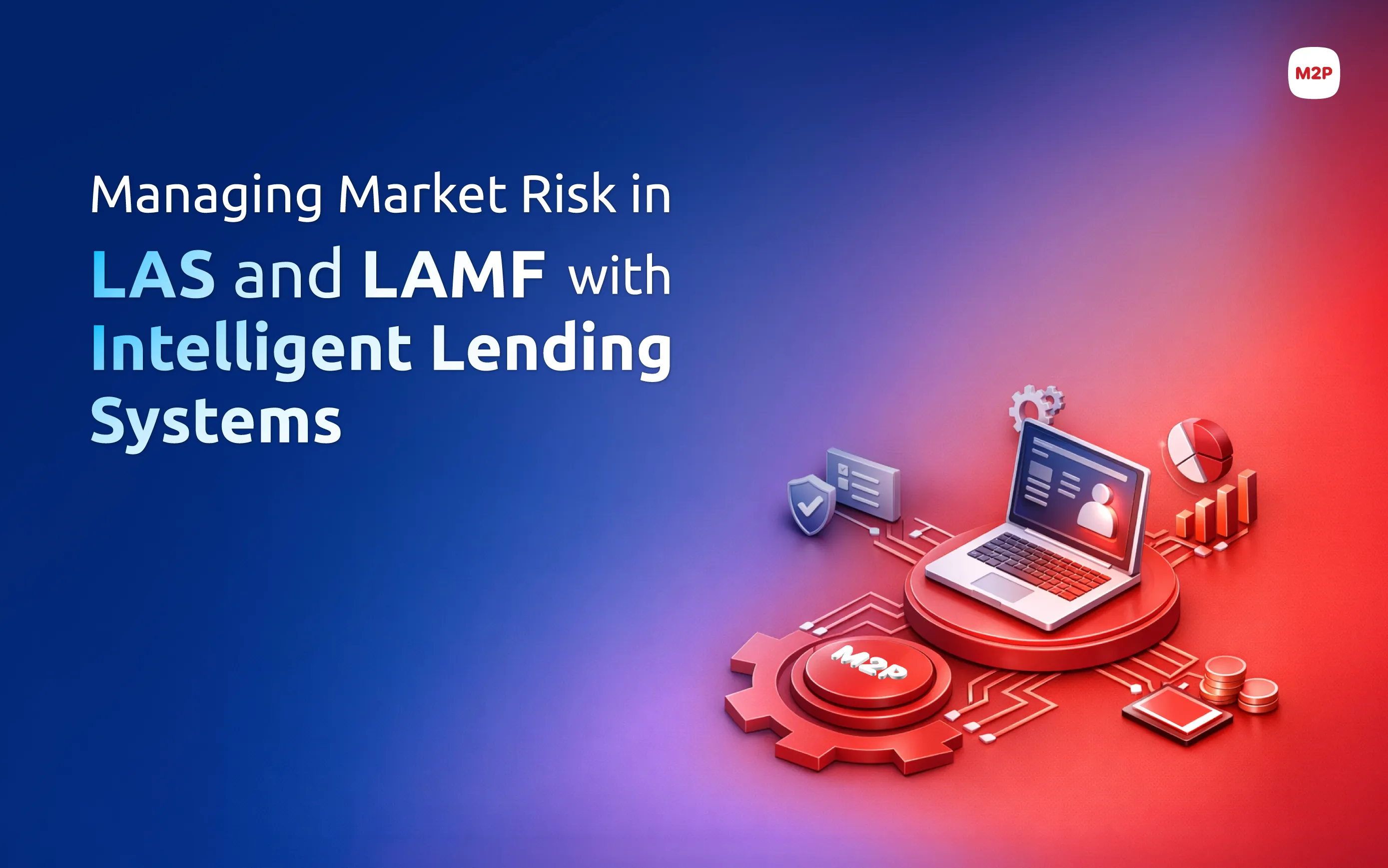
Loan Against Securities (LAS) and Loan Against Mutual Funds (LAMF) are among the most financially attractive segments in Indian lending. For borrowers: instant liquidity without liquidating investment positions. For lenders: a secured, short-duration yield on well-collateralised exposure with low credit risk.
The challenge sits in the middle, in the daily operational demands of managing a dynamic collateral pool. NAV fluctuations, LTV compliance windows, margin call workflows, pledge management, and utilisation monitoring all require infrastructure that standard EMI-based lending systems were never designed to provide.
The lenders winning in LAS and LAMF today aren't the ones with the best interest rates. They're the ones with the operational infrastructure to manage complexity at scale, transparently, compliantly, and without manual intervention.
Unlike personal or home loans, the primary risk in LAS and LAMF is not borrower credit risk — it's market risk. Collateral value changes every trading day.
LTV compliance risk: RBI mandates maximum LTV ratios. A borrower comfortably within LTV on Monday may be in shortfall by Thursday if markets drop 5%. Even intraday breach is a regulatory violation.
Shortfall risk: When collateral falls below the minimum margin, lenders must act within defined cure windows. Manual processes can't reliably execute at the required speed.
Concentration risk: A borrower pledging a single-sector portfolio faces amplified drawdown exposure during sector-specific corrections.
Operational risk: Manual pledge initiation, invocation, and release processes introduce error, delay, and audit gaps.
Liquidity risk: Drawdown patterns need continuous monitoring to prevent overutilisation of pre-approved credit lines.
Managing these risks through spreadsheets and daily NAV uploads is neither scalable nor reliable. It's also not defensible in an RBI examination.
LAMF portfolios operate as credit lines backed by market-valued securities, not fixed-value collateral. Mutual fund NAVs fluctuate daily, which directly impacts available drawing power and regulatory compliance.
Operational systems supporting LAMF must therefore handle:
Daily collateral revaluation
Dynamic drawing power calculations
Automated margin and shortfall management
Seamless pledge, release, and invocation workflows
Flexible credit line structures with real-time utilisation tracking
Conventional lending systems, designed for static collateral and periodic reviews, struggle to manage this complexity reliably at scale.
M2P's LAMF solution integrates with CMOT for daily NAV updates. Collateral values are refreshed on a daily basis, drawing power is recalculated accordingly, and shortfall positions are identified within the system. This automated NAV handling removes manual uploads and ensures drawing power and LTV positions are based on current market values.
When a borrower’s LTV moves beyond the configured threshold, the system identifies the shortfall through automated drawing power recalculation. Shortfall amounts are tracked at the credit line and pledge level, and configurable repayment strategies allow recovery of shortfall principal within the platform. All actions are governed by configured rules and are recorded within the system for operational control and reporting.
Asset pledging and collateral configuration through the Collateral Management System, supporting approved masters of mutual fund securities with configurable LTV parameters.
Controlled asset release workflows with approval mechanisms, enabling partial or complete release of pledged assets within defined operational controls.
Shortfall-linked collateral actions, where pledged assets and credit line exposure are managed based on automated drawing power recalculation and configured shortfall logic.
Pledge-level LTV override capabilities, allowing differentiated LTV treatment across securities as per configured product and risk policies.
API-enabled collateral operations, supporting asset addition, release, and status tracking within the lending and collateral management platform to reduce manual processing and accelerate implementation.
Securities‑based lending requires flexible product constructs aligned to borrower usage patterns. M2P’s LAMF solution supports configurable credit line structures, including:
Credit line–based lending models with configurable monthly billing or bullet repayment options
Interest‑only billing during periods of active line utilisation
Line tenure management, including tenure extension and structured line closure workflows
Flexible drawdown options, supporting lump sum or partial drawdowns at the credit line level
Aggregation of pledged mutual fund folios, enabling higher credit limits based on combined collateral value
Effective management of LAS/LAMF portfolios requires visibility into credit line utilisation and collateral position, beyond basic delinquency status.
M2P’s platform provides utilisation and exposure views at the credit line and collateral level, enabling lenders to monitor drawdowns, available drawing power, LTV position, and collateral holdings through system reports and dashboards. This consolidated visibility supports ongoing operational oversight and informed portfolio management, especially for lenders managing large LAMF books.
LAS and LAMF products are governed by regulatory requirements such as approved LTV thresholds, margin maintenance, and KYC/AML obligations linked to securities-backed lending.
M2P’s platform enforces LTV and exposure parameters through configured system rules. Drawing power, credit line utilisation, and collateral exposure are validated against approved LTV limits as part of system-controlled workflows, ensuring that credit operations align with configured policy and compliance requirements.
Compliance checks are embedded into credit line and collateral processes rather than handled as periodic, manual reviews.
Operational Challenge | Intelligent System Resolution |
Manual NAV update delays | Automated daily NAV refresh via CMOT, enabling system-driven drawing power recalculation |
Limited visibility into shortfall positions | Automated shortfall computation based on daily NAV and configured LTV logic |
Operational friction in collateral handling | Centralised collateral management with system-controlled asset addition and release workflows |
Risk of inconsistent LTV monitoring | Configured LTV enforcement applied during drawdowns and exposure changes |
Fragmented borrower view | Unified collateral holding and credit line visibility within the platform |
LAS and LAMF are operationally demanding products that require infrastructure built for dynamic collateral management, real-time compliance enforcement, and complex credit line structures, simultaneously, at scale, without manual intervention at every step.
The lenders who will grow this book are those who have moved beyond spreadsheets and periodic manual reviews to a system that manages compliance automatically, alerts accurately, and scales without adding operational headcount proportionally.
Fintech is evolving every day. That's why you need our newsletter! Get the latest fintech news, views, insights, directly to your inbox every fortnight for FREE!