

M2P Fintech
Fintech is evolving every day. That's why you need our newsletter! Get the latest fintech news, views, insights, directly to your inbox every fortnight for FREE!
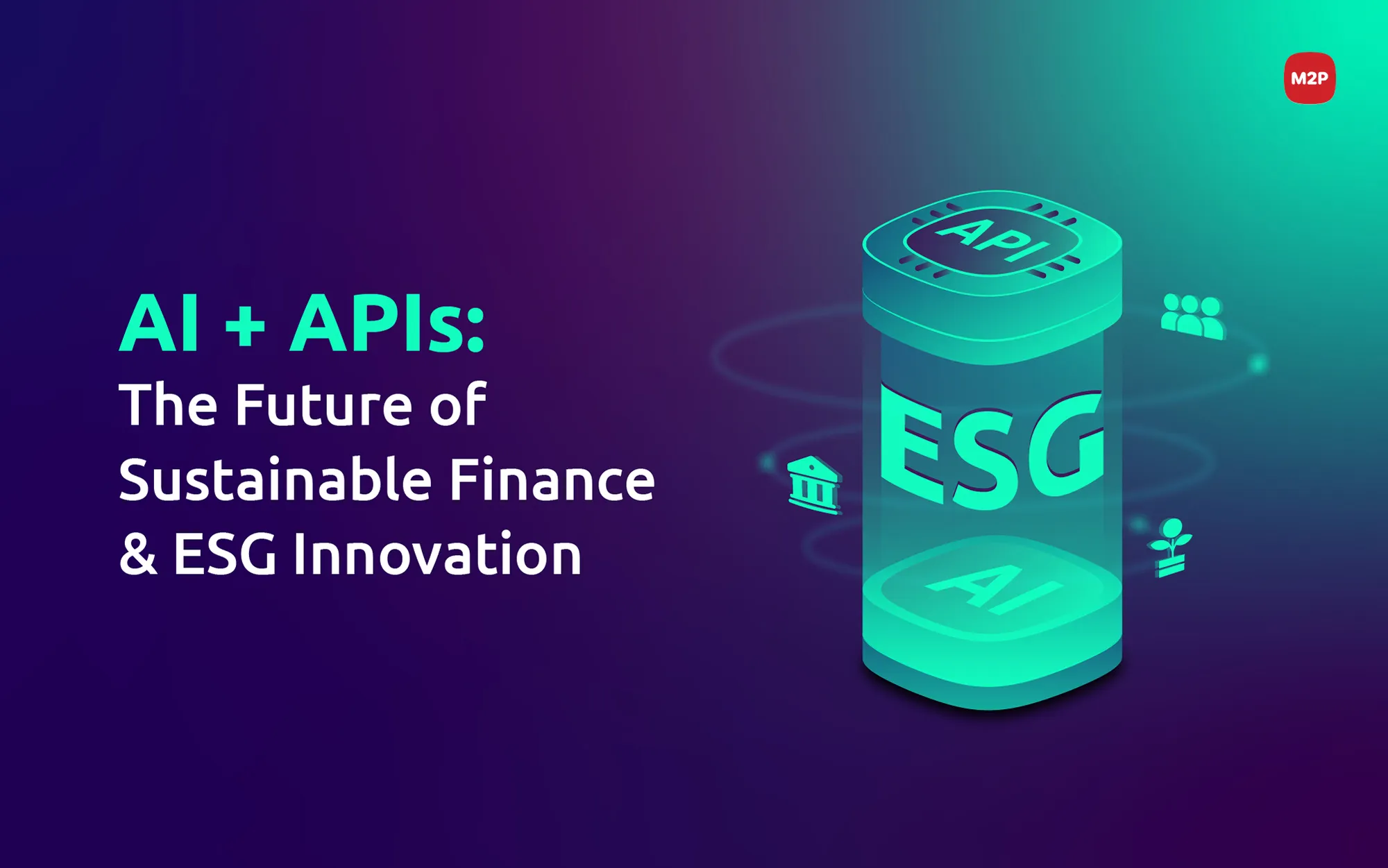
Global sustainable finance is projected to surpass $22 trillion by 2031, and the financial sector gets to grip with fragmented ESG data, inconsistent metrics, and the challenge of embedding sustainability logic into day-to-day decisioning.
The movement toward sustainable finance has been decades in the making. Today, APIs at the core of this transformation, acting as digital connectors that seamlessly link legacy infrastructures with advanced ESG tools. This integration unlocks real-time insights and powers innovative solutions, driving sustainable finance forward.
This blog explores the evolution of sustainable finance, the rise of fintech in this space, and how APIs, amplified by AI, are fueling the next era of ESG innovation.
Sustainable finance has come a long way since its early roots in the late 20th century. What began as niche ethical investing has evolved into a mainstream strategy integrating ESG criteria into global capital allocation. By the early 2000s, frameworks like the United Nations Principles for Responsible Investment (UNPRI) formalized this approach, debunking myths that sustainability compromises return. Instead, studies showed that ESG-focused investments often outperform traditional ones by mitigating risks like regulatory fines or reputational damage.
Today, sustainable finance encompasses everything from green bonds funding renewable energy projects to impact investing aimed at social equity. The momentum is driven by regulatory pressures, such as the EU's Sustainable Finance Disclosure Regulation (SFDR) and the U.S. SEC's climate risk disclosures, alongside investor demand. Millennials and Gen Z, who will inherit trillions in wealth, prioritize values-aligned portfolios, pushing asset managers to adapt. However, the sector's digital maturity lags, with many institutions still reliant on siloed, legacy systems unable to handle dynamic ESG data.
Sustainable fintech bridges this gap by leveraging technology to make finance more inclusive, efficient, and eco-conscious. It uses digital tools to address ESG challenges, from promoting financial access in underserved communities to funding low-carbon initiatives. Unlike traditional finance, fintech operates with agility, deploying apps, platforms, and algorithms that democratize sustainable options.
For instance, platforms like Aspiration or TreeCard allow users to offset carbon emissions with every purchase, turning routine spending into environmental action. Green finance, a subset, focuses on directing capital toward climate-positive projects, such as solar farms or biodiversity conservation. Together, they create a virtuous cycle: fintech innovates the tools, while green finance scales the impact.
The 2010s marked fintech’s explosive growth, introducing technologies that transformed how financial services operate:
Blockchain for transparent transactions – Providing tamper-proof ledgers, blockchain enabled secure, verifiable transactions, improving trust and traceability, which is especially critical for ESG reporting and green finance.
AI for personalized advice – Machine learning and intelligent algorithms allowed platforms to deliver tailored financial guidance, optimize investment portfolios, and even recommend ESG-aligned opportunities based on individual preferences.
Data analytics for risk assessment – Advanced analytics turned vast streams of financial and non-financial data into actionable insights, helping institutions measure environmental, social, and governance risks, and make informed lending and investment decisions.
These technologies enhance ESG integration, making it easier to track metrics like carbon footprints or social impact scores.
APIs act as the critical bridge connecting legacy banking cores with external ESG data sources, AI-driven analytics, and the 3rd party sustainability platforms, all without requiring costly overhauls.
Facilitates Real-Time Data Interoperability
ESG information is inherently scattered across diverse sources such as satellite imagery, regulatory databases, corporate sustainability reports, and real-time monitoring platforms. APIs aggregate and harmonize this data into structured and usable formats, eliminating manual data entry and reducing errors. For example, carbon tracking APIs can instantly pull emission data from global monitoring networks, allowing banks to assess the environmental footprint of transactions in real time.
APIs Enable Automation
They embed sustainability logic directly into their core operations. Whether its scoring loans based on environmental, social, and governance (ESG) criteria, automating ESG compliance checks, or rebalancing investment portfolios for sustainability, APIs streamline these processes. Their modular design ensures that systems remain flexible and resilient, capable of adapting to new regulations or evolving sustainability standards without major disruptions.
APIs Drive Scalability
By standardizing access to ESG data and services, APIs foster an open ecosystem where startups and established players alike can innovate rapidly. This accelerates the deployment of green financial products, such as ESG-linked bonds, climate-resilient insurance, and sustainable investment platforms. Startups can build on existing infrastructure, leveraging APIs to create tailored solutions that meet the unique needs of different market segments. This democratization of access fuels competition drives costs and broadens the reach of sustainable finance.
Enhances Transparency and Trust
APIs also play a vital role in increasing transparency. By providing auditable trails of data flows and decision logic, they help build trust among stakeholders including the investors, regulators, and customers. This transparency is crucial for verifying ESG claims and ensuring that sustainability initiatives are both credible and impactful.
Climate-Integrated Credit & Risk Models - Fintech APIs unlock real-time environmental data for sustainability-driven lending and insurance decisions. As underwriting platforms embrace AI, these APIs add adaptive, climate-aware logic, delivering autonomous or human-in-the-loop decisions. This leads to EVs qualifying for lower premiums, and businesses with superior carbon profiles access preferential loan terms.
Dynamic ESG Investment Intelligence - For both institutional decisions and client portfolios, ESG APIs evolve beyond annual reports to live feeds from emissions sensors, satellite data, and news sentiment. This richer, verified data layer powers investment platforms with actionable insights, enabling truly conscious capital allocation.
Next-Gen Green Instruments - From tokenized carbon credits to fractional green bonds, APIs manage innovative financial products seamlessly, layering them onto existing banking rails without core system overhauls. This allows issuers and intermediaries to add new products without replacing old systems, instead connecting them through API gateways, marketplaces, and embedded finance partners.
As sustainable finance scales, having vast ESG datasets is not enough, financial institutions need intelligent tools to interpret, act on, and anticipate sustainability risks and opportunities. This is where AI, powered by API-connected data, comes into play, transforming raw information into predictive insights and actionable strategies.
Advanced ML Algorithms - Forecast environmental exposures, quantify asset-level carbon footprints, and run scenario simulations for portfolio optimization. APIs deliver the structured, live data streams AI craves, shifting from backward-looking reports to forward-thinking automation.
Forward-Looking ESG Intelligence - AI leverages API streams to anticipate risks, from supplier emissions spikes to policy changes. Financial institutions model climate events like regional droughts, recalibrating lending and investment strategies ahead of impact.
Proactive Regulatory Adaptation - Intelligent systems scan API-connected global regulation feeds, auto-adjusting compliance rules in real time. This maintains alignment without manual intervention as green finance standards evolve.
Tailored Sustainable Journeys - AI sifts API-enriched customer profiles to craft personalized green offerings, curated ESG portfolios matching values, or bespoke carbon reduction plans. Apps powered by this tech nudge users toward lower-impact choices, driving adoption.
The future of sustainable finance will be defined by technologies that enhance ESG integration, enabling faster, more transparent, and data-driven decision-making. Beyond APIs and AI, emerging tools are enabling real-time ESG tracking, transparent reporting, and innovative green financial products that scale across markets:
Blockchain for Carbon Credits: Blockchain (Distributed Ledger Technology, or DLT) provides an immutable ledger to track the issuance, ownership, and retirement of carbon credits, preventing double-counting. APIs link this verifiable, on-chain data back to the financial institution's system, allowing AI to automatically approve the transfer of credits and calculate net-zero progress with absolute transparency.
IoT for Real-Time Emissions Tracking: Internet of Things (IoT) sensors embedded in factories, vehicles, and supply chains provide granular, real-time emissions data. When integrated via APIs into ESG platforms, this data enables accurate carbon accounting and predictive risk modeling.
Other Innovations: For verifying physical impact (like a green bond funding a reforestation or solar project), high resolution satellite imagery analyzed with computer vision models can reliably identify solar installations. For example, researchers using satellite imagery achieved detection accuracy of about 97.8% for solar arrays in a test region, illustrating how automated verification can bolster confidence in reported environmental outcomes.
Looking forward, the fusion of AI, climate analytics, and fintech infrastructure heralds a new era of intelligent sustainability. By 2030, machine learning will deliver precise, predictive ESG capabilities, anticipating climate risks, detecting greenwashing through unstructured data analysis, and optimizing portfolios for maximum impact with minimal trade-offs.
APIs serve as the essential connectivity layer for ESG transformation, powering seamless data orchestration, instant insights, and effortless compliance. Financial institutions building API-centric platforms and AI-powered ESG intelligence now will dominate tomorrow's green finance landscape, where capital actively accelerates climate solutions and responsible growth.
Follow us on LinkedIn and Twitter for insightful fintech bytes curated for curious minds like you.
Reference links:
https://www.alliedmarketresearch.com/sustainable-finance-market-A19436
High resolution satellite imagery for residential PV system detection – pv magazine International
https://www.tntra.io/blog/sustainable-finance-how-fintech-solutions-driving-green-initiatives/
https://www.bobsguide.com/green-fintech-powering-sustainable-finance-and-climate-risk-management/
https://www.imgglobalinfotech.com/blog/rise-of-green-fintech
https://thedatascientist.com/how-fintech-apis-enable-esg-integration-green-finance/


Fintech is evolving every day. That's why you need our newsletter! Get the latest fintech news, views, insights, directly to your inbox every fortnight for FREE!