

M2P Fintech
Fintech is evolving every day. That's why you need our newsletter! Get the latest fintech news, views, insights, directly to your inbox every fortnight for FREE!
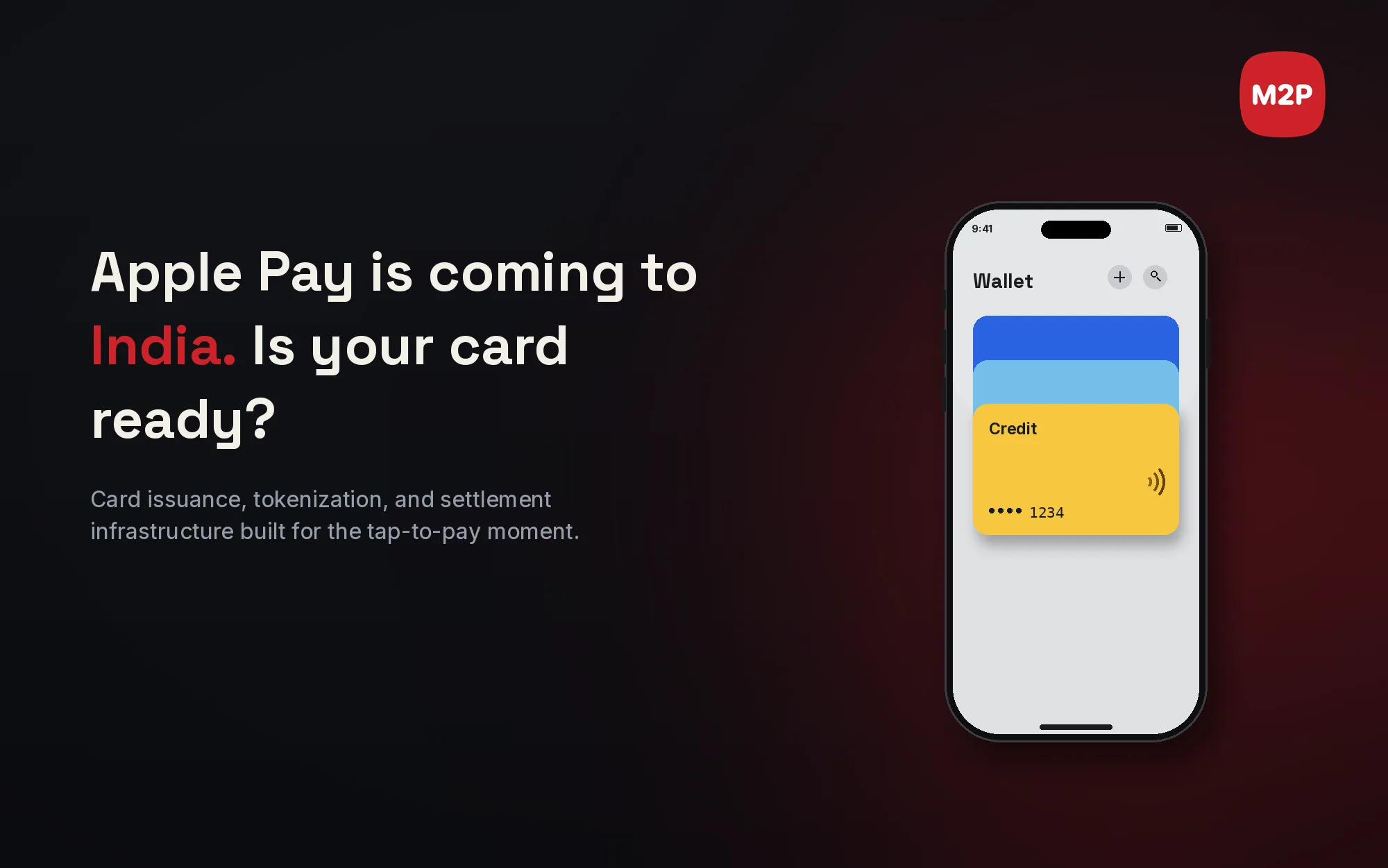
India has already shown the world how quickly payment behaviour can change when infrastructure, banks, and technology come together at scale. UPI made real-time account-to-account payment part of daily life. Contactless cards, tokenized commerce, and mobile banking have continued to mature alongside it.
Now, reports of a possible Apple Pay launch in India are opening a new conversation for the card ecosystem. Current reporting points to a potential rollout centred on eligible Visa and Mastercard credit cards, possibly without UPI at the outset. Apple has not officially confirmed the date, participating issuers, or final product scope - so for now, the industry should treat the timing as reported, not fixed.
Apple Pay doesn't need to displace UPI to matter. Its likely role is narrower and more specific: giving eligible cardholders a secure, device-native way to use their existing cards - in stores, in apps, and online - without needing a new bank account or a new rewards programme. For premium and digitally active customers who already lean on credit cards for travel, dining, retail, and subscriptions, that's a real, immediate value-add.
The bigger shift underway isn't plastic to phone. It's a card number becoming a secure digital credential. Tokenization replaces the underlying card number with a device-specific credential, and device-level authentication protects each payment. The card itself becomes safer to use and easier to extend across physical and digital channels.
For issuers, this opens up real opportunity across:
Digital activation and early card usage
Mobile banking engagement
Contactless and online payment experience
Top-of-wallet preference
Premium and travel portfolio relevance
Overall security posture and customer confidence
The customer experience is designed to feel effortless: add a card, verify, pay. Behind that simplicity sits a coordinated programme spanning card eligibility, network tokenization, identity verification, authorization, fraud controls, mobile app integration, and ongoing token servicing.
That means Apple Pay shouldn't be treated as a standalone wallet project. It belongs inside the issuer's broader card, digital banking, and customer experience strategy - and the issuers who start mapping their portfolio and technology dependencies now will simply be in a stronger position once the details firm up.
M2P Fintech works with issuers across card management, issuer processing, tokenization, and digital payment infrastructure, and we already support Apple Pay-enabled issuer programmes in the Middle East. As India's wallet eco-system evolves, that experience gives us a practical, on-the-ground view of the coordination a launch like this actually requires.
The real question for issuers right now isn't just when Apple Pay arrives in India. It's whether their card portfolio, processing environment, and mobile app are ready for the next generation of digital card experiences - whenever that moment comes.
This is the first in a short series on issuer readiness for Apple Pay in India. The next piece looks at exactly what "ready" means - for the business side and the technology stack.
Has Apple officially confirmed an Apple Pay launch in India?
No. As of now, Apple has not confirmed a launch date, participating issuers, or final product scope. Current information is based on media reporting, not an official announcement.
Will Apple Pay work with UPI in India?
Early reporting suggests an initial rollout centred on eligible Visa and Mastercard credit cards, potentially without UPI support at launch. This may evolve as more official details emerge.
Does Apple Pay replace UPI for Indian customers?
Unlikely to be positioned that way. Apple Pay is expected to serve a complementary role - giving eligible cardholders a device-native way to use existing credit cards, alongside UPI's continued use for account-to-account payments.
What should card issuers do before an official announcement?
Start mapping card portfolio eligibility, processing dependencies, and mobile app readiness now, so the issuer is positioned to move quickly once details are confirmed.
Fintech is evolving every day. That's why you need our newsletter! Get the latest fintech news, views, insights, directly to your inbox every fortnight for FREE!