

M2P Fintech
Fintech is evolving every day. That's why you need our newsletter! Get the latest fintech news, views, insights, directly to your inbox every fortnight for FREE!
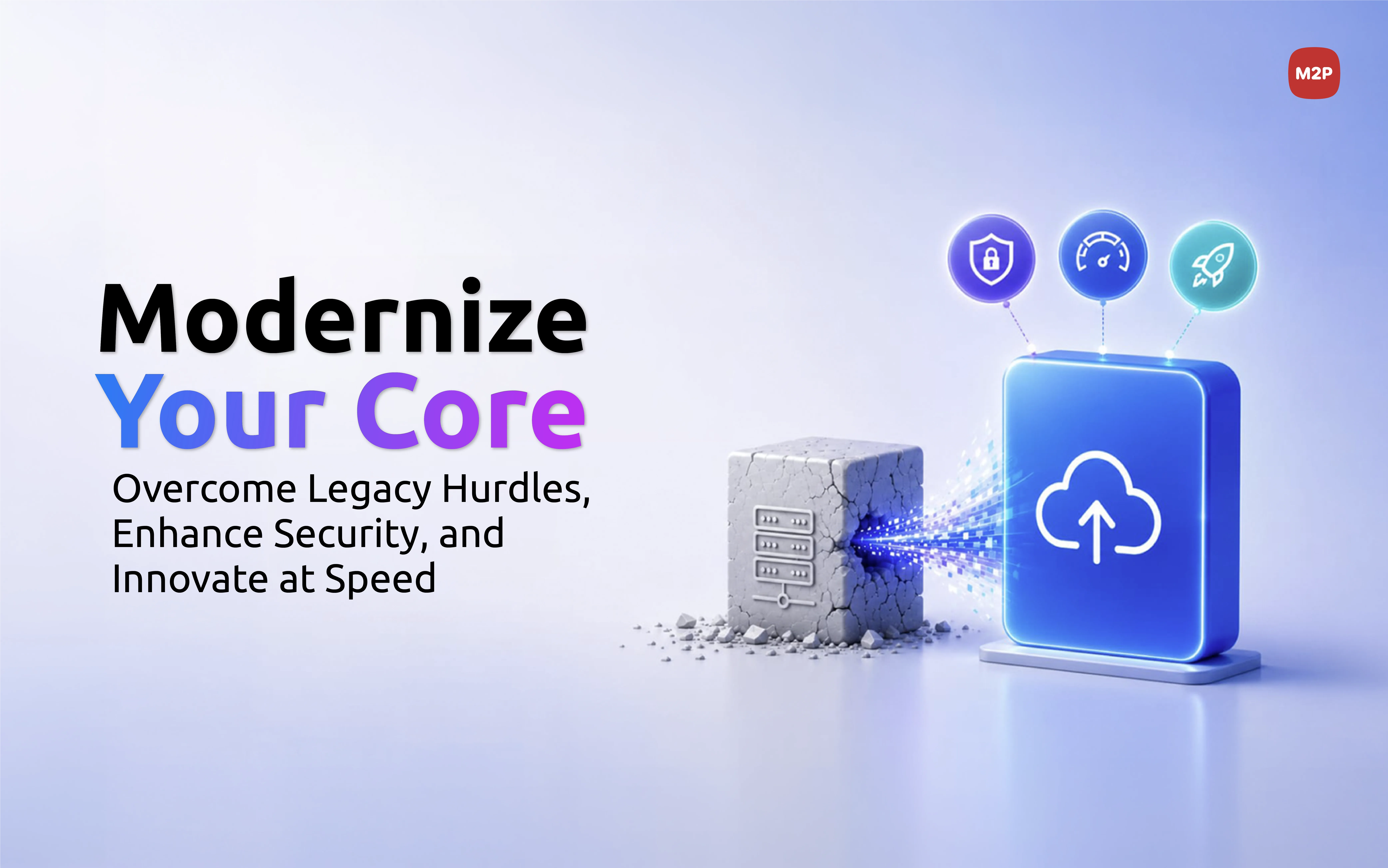
The engine of any financial institution, the Core Banking System (CBS), is facing a period of unprecedented challenge. This system has evolved through four distinct generations, from back-office, mainframe-bound systems focused on batch processing to the modern ideal of a customer-centric, cloud-native platform. However, many institutions remain encumbered by legacy systems from the first and second generations, which are fundamentally ill-suited for the demands of modern, digital-first banking. The rapid evolution of customer expectations, driven by agile fintech competitors, and an increasingly complex regulatory and cybersecurity landscape are exposing the severe limitations of this outdated technology. This report delves into the multifaceted challenges confronting modern core banking and explores how M2P Fintech's innovative solutions are empowering financial institutions to overcome these hurdles and thrive in the digital age.
The core banking systems that were once the bedrock of stability are now, in many cases, significant impediments to growth and innovation. The primary driver of this crisis is the clash between the architectural constraints of legacy systems and a fundamental shift in customer expectations, catalyzed by the rise of fintechs and neobanks. These digital-first companies, unburdened by legacy infrastructure, have set new standards for the customer experience.
24/7 Service Availability: Accustomed to always-on digital services, customers expect to conduct banking anytime, anywhere, a stark contrast to the maintenance windows and batch schedules of older systems
Real-Time Transaction Updates: In an era of instant notifications, customers expect to see transactions and balance changes reflected immediately, not after an overnight process
Hyper-Personalized Financial Products: Fintechs leverage data analytics to offer tailored products and advice, creating an expectation for personalization that legacy systems with their fragmented data cannot deliver
Rapid Innovation: The speed at which fintechs launch new features has conditioned customers to expect a continuous stream of improvements, a pace that is difficult to match with rigid, monolithic systems
Financial institutions are grappling with a host of technical, operational, and financial issues as their outdated core infrastructure, designed for a world of branch-centric, batch-processed banking, fails to meet these modern demands.
The core of the problem lies in the deeply entrenched nature of legacy systems, many of which are first-generation platforms built on mainframe architectures using outdated programming languages like COBOL.
Monolithic Architecture and Hard-Coded Rules: Many legacy systems are built as a single, tightly-coupled "monolithic" unit, sometimes called a "big ball of mud". Business rules are often hard-coded directly into this "spaghetti code," making them incredibly difficult to modify. This means even minor product changes can become complex, costly projects that require extensive testing across the entire system, stifling the agility needed for rapid innovation
Batch Processing Delays: A fundamental design flaw is their reliance on processing transactions in large batches, typically overnight. This inherent delay is fundamentally at odds with the customer demand for real-time updates and 24/7 service. It makes a comprehensive, real-time view of a customer's financial position impossible, rendering data stale by the time it can be analyzed. This critically undermines both the customer experience and compliance efforts
Data Silos and Fragmentation: In these product-centric legacy systems, customer data is frequently fragmented in inconsistent formats and trapped in isolated silos. A customer's deposit accounts, loan data, and credit card history might all reside in separate, incompatible platforms. This fragmentation makes achieving a single, 360-degree customer view—a prerequisite for the hyper-personalization customers now expect—a significant challenge. Migrating decades of this sensitive data is also perilous, fraught with risks of data loss and corruption
Lack of Open APIs and Integration Difficulty: Legacy systems were designed as closed, standalone entities and lack the modern Application Programming Interfaces (APIs) needed for seamless integration with third-party fintechs and modern applications. This inflexibility severely limits a bank's ability to innovate and participate in the open banking ecosystem. It forces banks to rely on costly custom interfaces or "wrappers," creating an "integration tax" that can cost over $500,000 annually
The architectural flaws of legacy systems create a direct clash with the real-time, data-intensive nature of modern financial regulations and expose banks to significant cyber threats.
Anti-Money Laundering (AML): Effective AML compliance requires continuous, real-time transaction monitoring to detect suspicious activities as they happen. The batch-processing nature of legacy systems creates dangerous delays, giving criminals a window to complete illicit transactions. These systems also struggle with the enriched data formats required by modern AML standards
GDPR (General Data Protection Regulation): Data silos make it incredibly difficult to comply with GDPR mandates like a consumer's "right to erasure". Lacking a unified customer view, banks struggle to locate and manage specific data points, risking substantial fines
PSD2 (Second Payment Services Directive): This directive requires banks to provide third-party providers with secure, real-time API access to customer data. Legacy systems, not built for open connectivity, struggle to meet this mandate securely and efficiently
Expanded Attack Surface: Integrating closed legacy systems into a modern, API-driven ecosystem dramatically expands the potential entry points for cyberattacks. These older systems often run on obsolete software with unpatched vulnerabilities
Insecure API Integrations: The custom "wrappers" used to connect legacy systems via APIs can be insecurely designed, leading to critical vulnerabilities like broken authentication or excessive data exposure
Lack of Modern Security: Legacy systems frequently lack support for modern security protocols like multi-factor authentication (MFA) and robust encryption, making them prime targets
Third-Party Risk: Relying on third-party vendors to support aging systems introduces additional supply chain risks
The cost of maintaining legacy systems and the risks of modernization create significant financial and operational strain
High Costs of Maintenance and Modernization: A significant portion of IT budgets—some reports indicate 60-80%—is consumed by maintaining these outdated systems, diverting resources from innovation. While transformation projects are expensive, often running into hundreds of millions of dollars, a modernized platform can ultimately reduce the Total Cost of Ownership (TCO) by 38-52%
The Specialized Talent Crisis: A critical challenge is the shrinking pool of programmers with expertise in legacy languages like COBOL, who are now retiring. This drives up maintenance costs and risk. Simultaneously, banks face intense competition for professionals with modern skills in cloud computing and data analytics, creating a skills gap that is a primary barrier to transformation
Migration Risks and Business Disruption: The "big bang" approach to migration carries a high risk of catastrophic failure and service downtime. A phased approach can mitigate this, but running new and old systems in parallel creates its own complexities and increased operational overhead
In response to these pressing challenges, M2P Fintech has emerged as a key enabler of digital transformation with its modular, API-first "banking operating system". By leveraging a fourth-generation, cloud-native and microservices-based architecture, M2P provides a comprehensive solution designed to directly address the pain points of legacy systems and meet modern customer expectations
Countering Architectural Rigidity with Agility and Low-Code Empowerment: At its heart, M2P's solution is an API-driven, microservices-based infrastructure that abstracts away the complexity of the underlying core. This "composable" architecture directly counters the rigid, monolithic nature of older systems, enabling the rapid innovation and seamless third-party integration that customers now demand. M2P empowers non-technical bank employees to bypass traditional development cycles and create products themselves
No-Code Platform (Connect): Fast-track your GTM strategy. Our intuitive platform Connect enables you to effortlessly create, govern, and monetize secure APIs while seamlessly connecting with your core systems and data sources
Low-Code Platform: M2P’s core banking solution offers low-code capabilities with pre-built modules. This allows a product manager to assemble and launch a new product by configuring features for rewards, fees, and limits, drastically reducing time-to-market to meet the demand for rapid innovation
Eliminating Silos and Enabling Real-Time Insights: M2P's approach is centred on providing a holistic and integrated core banking system. The platform's end-to-end stack breaks down the data silos inherent in legacy systems, providing the single, unified customer view essential for hyper-personalization and compliance. Built on a cloud-native, high-availability architecture, the Turing platform enables the real-time data processing that is impossible with batch systems. This provides the foundation for instant payments, 24/7 service, and immediate risk analysis, directly meeting modern customer expectations
Reducing Financial Burdens and Migration Risk: Recognizing the high costs and risks of modernization, M2P's cloud-native model offers benefits like auto-scaling, allowing banks to pay only for the infrastructure they use and significantly reducing TCO compared to legacy maintenance. To tackle the challenge of migration, M2P has developed a proven methodology for moving from legacy systems. M2P has demonstrated the ability to migrate millions of customer accounts with minimal disruption. For instance, one small finance bank successfully migrated over 1.5 million customers and 111 branches from an outdated legacy system in just 88 days, mitigating the "big bang" risk and ensuring data integrity
Strengthening Security and Compliance by Design: Security and compliance are woven into the fabric of M2P's platform. The Turing CBS comes pre-integrated with a Fraud and Risk Management (FRM) engine and utilizes advanced encryption, enabling the dynamic, real-time risk management that legacy systems cannot provide. The platform's modern, API-first design is built for secure, open connectivity, natively supporting modern protocols and avoiding the insecure ‘wrappers’ required by legacy systems. Furthermore, the platform automates the generation of regulatory reports, simplifying compliance with evolving rules
The modern core banking landscape is defined by a fundamental conflict: outdated legacy systems, many originating from the mainframe era of the 1960s-90s, are unable to meet modern customer expectations shaped by agile fintechs and neobanks. The architectural limitations of these legacy systems—including monolithic designs, batch processing, hard-coded rules, and data silos—prevent banks from delivering the 24/7, real-time, and hyper-personalized services that customers now demand. These technical flaws create severe business challenges, including an inability to meet the data-driven requirements of regulations like GDPR and AML, and they introduce significant cybersecurity vulnerabilities when integrated into modern API ecosystems. These issues are compounded by the high cost of maintenance, a shortage of specialized COBOL programmers, and the immense risk of data migration.
M2P Fintech provides a powerful solution with its Turing core banking platform, a modular ‘banking operating system’ designed for the modern, fourth generation of banking. By leveraging an API-first, cloud-native, and microservices-based architecture, M2P offers the flexibility and scalability needed for digital banking. Its integrated stack eliminates data silos, enabling the real-time processing necessary for dynamic risk management, regulatory compliance, and delivering on customer expectations for instant updates. M2P's standout feature is its low-code/no-code platform, which empowers non-technical bank employees to design and launch new financial products with intuitive tools, enabling the rapid innovation required to stay competitive. With a proven migration methodology that minimizes risk and a cloud-native design that reduces total cost of ownership, M2P empowers financial institutions to overcome the hurdles of legacy systems and embrace a future of agile, secure, and customer-centric banking.
Looking to modernize your core banking? Get in touch with our experts today.
Follow us on LinkedIn and X for insightful fintech bytes curated for curious minds like you.
Fintech is evolving every day. That's why you need our newsletter! Get the latest fintech news, views, insights, directly to your inbox every fortnight for FREE!