

M2P Fintech
Fintech is evolving every day. That's why you need our newsletter! Get the latest fintech news, views, insights, directly to your inbox every fortnight for FREE!
In a world where consumer preferences evolve at a breakneck pace, the ability to adapt is no longer just an advantage; it's a prerequisite for survival. This is especially true in merchant payments. The days of a simple cash or card transaction are being replaced by a dynamic ecosystem of digital wallets, instant transfers, and innovative credit solutions. For businesses, this shift presents both a challenge and an opportunity. The challenge lies in managing a fragmented array of payment systems, which creates operational inefficiencies and disjointed customer experiences. The opportunity is to leverage these new technologies with a unified, "full-stack" platform to enhance customer experience, boost sales, and ultimately, future-proof the business.
This article explores the explosive growth in the merchant payments landscape, the critical pain points of a fragmented system, what it means to have a truly future-proof payment solution, and how partnering with an innovator like M2P can help your business thrive.
The payments industry is in a constant state of flux. The adoption of digital payment methods across Asia has been nothing short of meteoric, led by the insatiable demand for instant, convenient transactions. India, powered by its Unified Payments Interface (UPI), has been at the forefront of this revolution. UPI transactions have grown at a staggering compound annual growth rate (CAGR) of 129% in volume between FY 2017-18 and FY 2023-24, with projections suggesting they will account for 91% of all retail digital payments in India by 2029.
This trend extends across the region. The number of digital wallet users is set to surpass 5.2 billion globally by 2026, with Southeast Asia being the fastest-growing region. QR codes have become ubiquitous, with their payment value in the Asia Pacific expected to grow by 300% by 2029. Simultaneously, Buy Now, Pay Later (BNPL) has exploded in popularity, the India Buy Now Pay Later (BNPL) market was valued at USD 2.79 billion in 2023 and is projected to grow rapidly to USD 34.31 billion by 2030, registering a CAGR of 36.1% during the 2024–2030 period. This digital wave is blurring the lines between online and offline commerce, creating a new "omnichannel" reality where consumers expect a seamless payment experience everywhere.
While this proliferation of digital options offers consumer choice, it creates a complex challenge for merchants using fragmented, non-unified systems. This forces businesses to piece together disparate services from multiple providers, leading to significant operational hurdles and a poor customer experience.
Administrative Overload: Managing multiple payment providers, each with its own contract, reporting format, and settlement process, creates a massive administrative burden. This results in time-consuming and error-prone manual reconciliation that can take days each month
Data Silos: A fragmented payment stack prevents a unified view of financial data, making it difficult to get a clear picture of cash flow, forecast revenue, or conduct audits
Margin Erosion: Merchants often face hidden costs, including higher transaction fees from split volumes, overcharges, and settlement mismatches. These small leakages can amount to millions of dollars in lost revenue
Barriers to Innovation: A fragmented system makes it difficult and costly to scale the business, expand into new markets, or adopt new payment trends, as each system needs to be updated individually
Inconsistent Journeys: Customers may find their preferred payment method is available online but not in-store, leading to frustration and purchase abandonment
Increased Friction: Juggling multiple systems increases the likelihood of payment failures, slow checkouts, and system downtime, all of which erode customer trust
Lost Sales: A disjointed checkout process or the absence of a preferred payment method is a primary driver of cart abandonment, directly impacting the bottom line
Future-proofing your business means moving away from a fragmented patchwork of services and embracing a modern, "full-stack" merchant platform built on a flexible, developer-friendly architecture. This approach provides a single, all-encompassing ecosystem to handle every aspect of a merchant's payment needs, from onboarding to settlement, while providing the agility to adapt to what's next.
A future-proof platform is defined by two core characteristics:
1. A Comprehensive, Full-Stack Foundation: A true full-stack platform consolidates all necessary payment components into one cohesive system. This includes the payment gateway and processor, merchant account, multi-channel support for all payment methods and currencies, and an intelligent transaction orchestration engine to optimize for cost and approval rates. Crucially, it also integrates robust security, compliance (KYC/AML), real-time fraud management, and automated tools for reconciliation and dispute management
2. A Flexible, API-First Architecture: The strategic power of a modern platform lies in its "API-first" architecture. This means every function is built as a reusable, programmable building block from the outset. This modular approach is the core of embedded finance, allowing payment functions to be seamlessly integrated into non-financial apps, like offering BNPL at checkout. It empowers developers with comprehensive SDKs and sandbox environments to innovate quickly and is built on forward-thinking principles like microservices and cloud-native design. This ensures the platform can handle the massive transaction volumes of IoT commerce and adapt to emerging technologies like Central Bank Digital Currencies (CBDCs)
A unified payment platform does more than just streamline operations; it consolidates all transaction data into a single system, turning it into a powerful strategic asset. This allows businesses to move beyond basic financial reconciliation and unlock new opportunities for growth:
Hyper-Personalized Marketing: By analyzing what, when, and how customers buy, businesses can gain deep insights into their preferences. This data, enriched with AI, enables the creation of hyper-personalized marketing campaigns and loyalty programs that dramatically improve customer engagement
Real-Time Risk Assessment: An integrated AI can monitor transactions in real-time to detect anomalies and score the risk of each transaction instantly. This proactive approach blocks fraud before it happens and reduces false positives that frustrate legitimate customers
New Data-Driven Revenue Streams: Transactional data itself is a valuable asset. Businesses can analyze purchase patterns to create new offerings like subscription models, offer premium data insights to business customers, or embed other financial services like lending and insurance to create powerful new revenue channels
Navigating this complex world requires an expert partner. M2P provides a comprehensive, full-stack merchant acquiring and payment processing platform designed to help businesses unify and future-proof their payment infrastructure. To illustrate the real-world impact, consider how M2P partnered with a leading digital bank in the Philippines. The bank, which serves small and medium-sized retailers, was crippled by manual processes that led to slow merchant onboarding and complex payment and dispute handling.
By implementing M2P's API-driven Merchant Management System (MMS), the bank automated its entire merchant lifecycle and achieved transformative results.
Here's how M2P's platform directly solves the pain points of fragmentation:
Unified, Automated Lifecycle Management: M2P's MMS provided a single platform that automated everything from onboarding to settlement. This eliminated the chaos of manual processes and directly addressed the bank's operational issues
Drastically Accelerated Onboarding: The system automated KYC and AML checks by integrating with the bank's core systems for document verification and deduplication. The result: an 80% faster onboarding time for new merchants
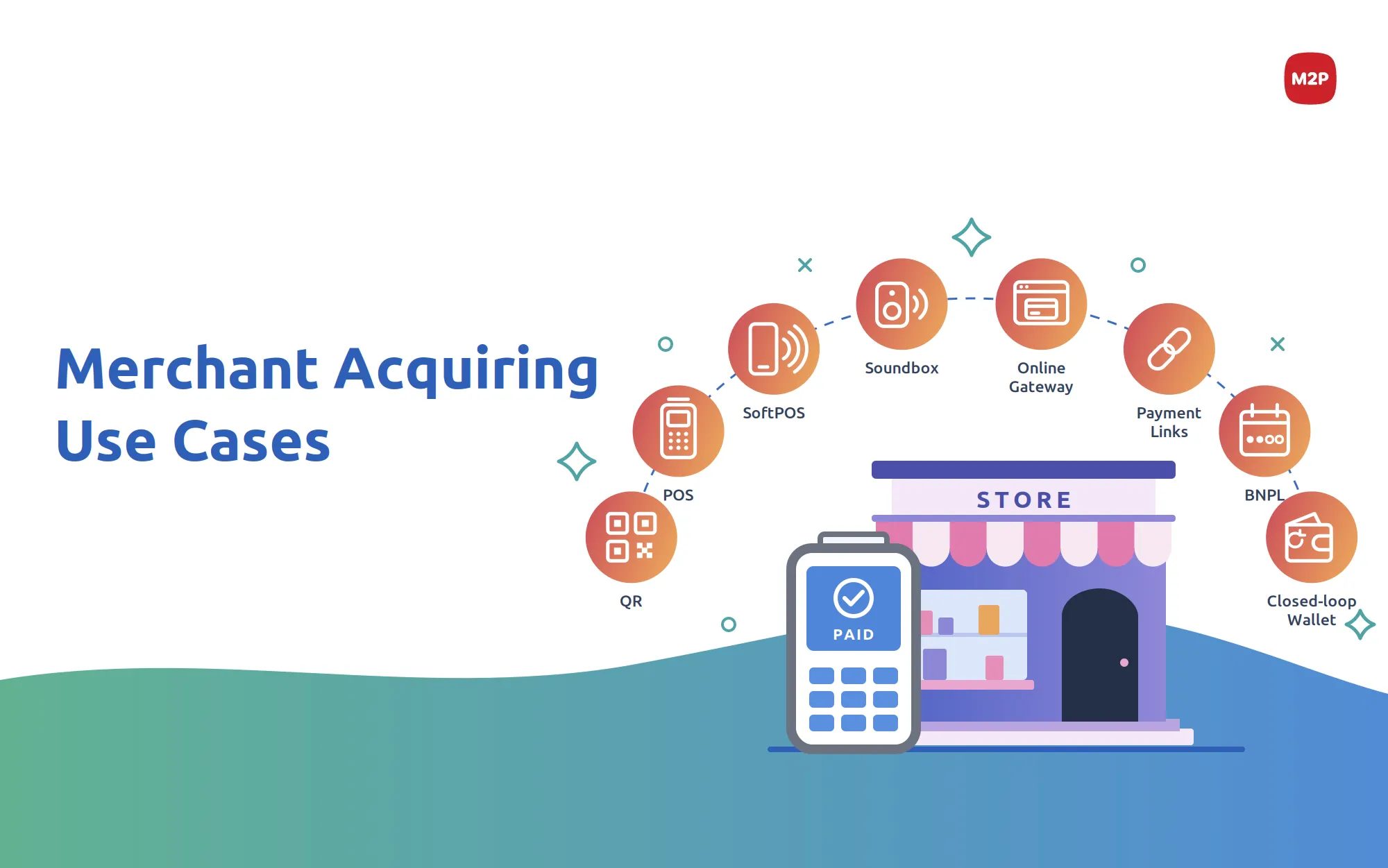
True Omnichannel Capabilities: M2P's solutions empower merchants with a mobile app for onboarding and payments and support a wide range of channels, including QR codes, payment links, and seamless online, offline, and in-app flows via APIs and SDKs
Automated Reconciliation and Dispute Management: The MMS automated the entire settlement and dispute resolution process, replacing a previously inefficient manual system. The result: a 60% improvement in overall operational efficiency
Faster Innovation and Customization: The modular, API-first nature of M2P's platform empowered the bank to innovate rapidly. They successfully launched credit lines for small retailers and a Buy Now, Pay Later (BNPL) program that is now growing exponentially
The future of merchant payments is here, and it's more dynamic and complex than ever before. To succeed, businesses must move beyond disjointed systems and adopt a forward-thinking, unified approach. By investing in a full-stack, API-first payment platform with an innovator like M2P, you can automate critical processes, unlock the strategic value of your transaction data, create superior customer experiences, and build a resilient foundation that is ready for the next wave of payment innovation. This strategic shift delivers tangible benefits: drastically improved operational efficiency, faster time-to-market, higher conversion rates, and new revenue opportunities, securing your position for long-term success.
Book a demo to see how M2P can help you scale faster, improve conversions, and unlock new revenue streams.
Fintech is evolving every day. That's why you need our newsletter! Get the latest fintech news, views, insights, directly to your inbox every fortnight for FREE!