

M2P Fintech
Fintech is evolving every day. That's why you need our newsletter! Get the latest fintech news, views, insights, directly to your inbox every fortnight for FREE!
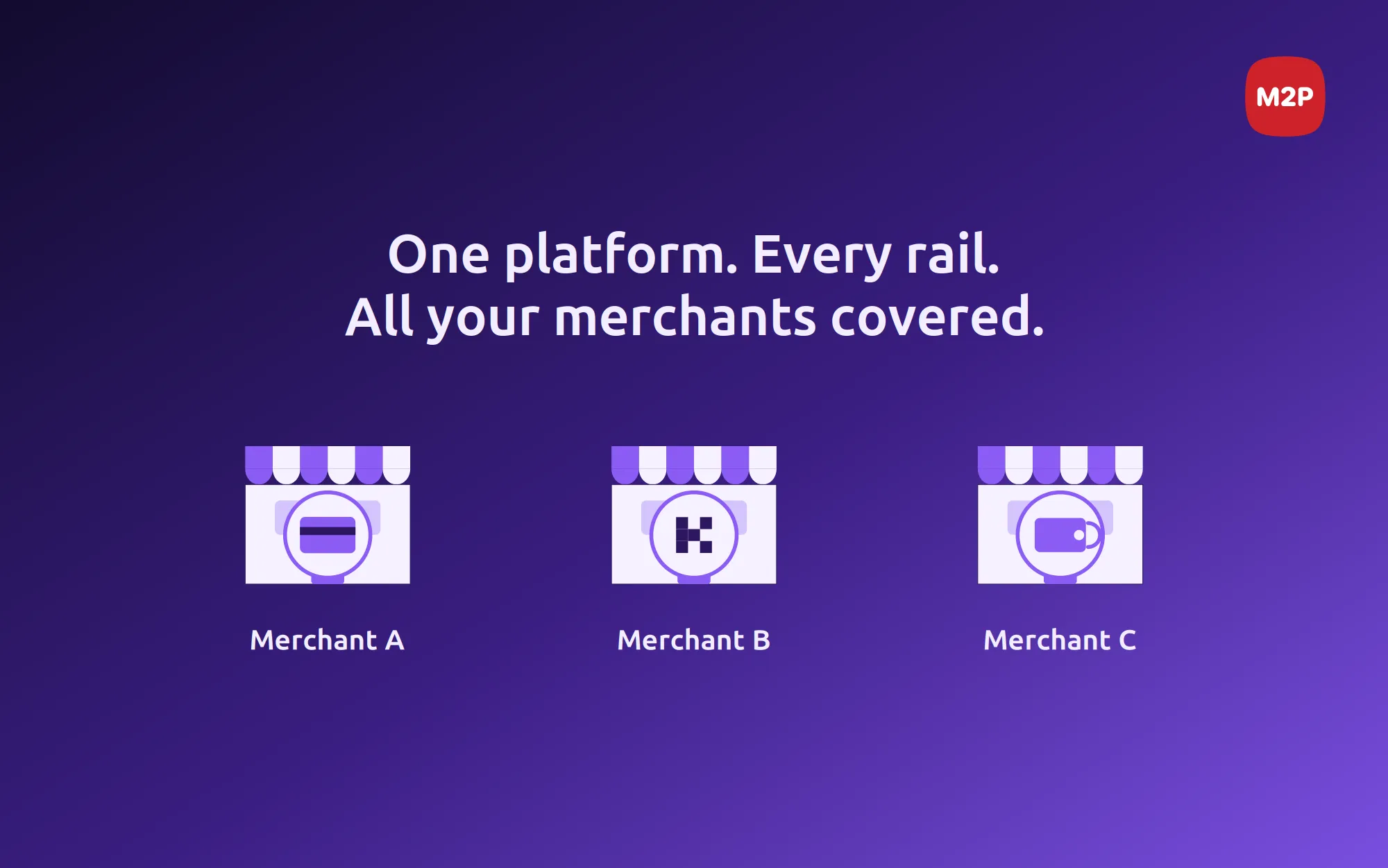
Merchants today don't accept payments through a single channel — they accept them through all of them. A customer might tap a card, scan a UPI QR code, or pay through a mobile wallet, often within the same store, sometimes within the same hour. For the merchant, this is a checkout convenience. For the acquiring bank or PSP behind that checkout, it's a considerably harder infrastructure problem.
This is what the industry calls multi-rail acquiring — the ability to accept, process, and settle payments across different payment rails through a single, unified system rather than a patchwork of disconnected channels.
A few years ago, an acquiring bank could reasonably specialize: card acquiring on one system, UPI on another, wallet integrations handled as one-off partnerships. That approach doesn't hold up anymore, for a few reasons:
Payment preferences are fragmented and shifting. Cards remain dominant for certain merchant categories, UPI has become the default for everyday retail in markets like India, and wallets continue to hold share in specific demographics and geographies. Merchants need to support all three to avoid losing sales at checkout.
Merchants expect one relationship, not three. A merchant onboarding with an acquirer wants a single dashboard, a single settlement cycle, and a single support line — not three vendor relationships stitched together on the back end.
Regulatory and interoperability requirements keep expanding. Rail-specific mandates (tokenization for cards, UPI's own compliance framework, wallet KYC norms) all have to be satisfied simultaneously, and increasingly, in real time.
Operational cost adds up fast. Running separate reconciliation, risk, and reporting pipelines per rail multiplies the acquirer's operational overhead and increases the chance of errors at settlement.
The acquirers that handle this well aren't the ones with the most integrations — they're the ones that have abstracted the complexity of each rail behind a common, well-architected core.
Supporting multiple rails isn't just a matter of adding more payment method logos to a checkout page. A platform genuinely built for multi-rail acquiring needs to solve for several things at once:
1. A unified transaction and settlement layer Regardless of whether a payment came in via card network, UPI, or a wallet provider, the acquirer needs consistent transaction data, consistent settlement timelines, and a single reconciliation process. Without this, finance teams end up manually reconciling three different formats from three different rails.
2. Rail-specific compliance without rail-specific silos Cards require PCI-DSS adherence and network-specific tokenization; UPI has its own NPCI compliance and dispute-handling framework; wallets bring their own KYC and interoperability rules. A well-designed acquiring platform builds compliance into the core architecture per rail, while keeping the merchant-facing experience consistent.
3. Risk and fraud monitoring that spans rails Fraud patterns don't respect payment method boundaries — a merchant being targeted for card fraud may also see anomalies on UPI. Acquiring platforms need FRM systems that monitor transaction behavior holistically across all rails a merchant uses, not in isolated per-rail silos.
4. Merchant onboarding that scales across payment types A merchant shouldn't have to go through separate onboarding for card acceptance versus UPI acceptance. Modern platforms consolidate KYB, documentation, and risk checks into a single onboarding flow that activates all relevant rails together.
5. Real-time visibility for merchants Merchants want to see all their transactions, across every rail, in one dashboard — with clarity on settlement status, fees, and disputes, without switching between tools.
This isn't a theoretical challenge for us — it's one we've built our Merchant Management System (MMS) around from the ground up.
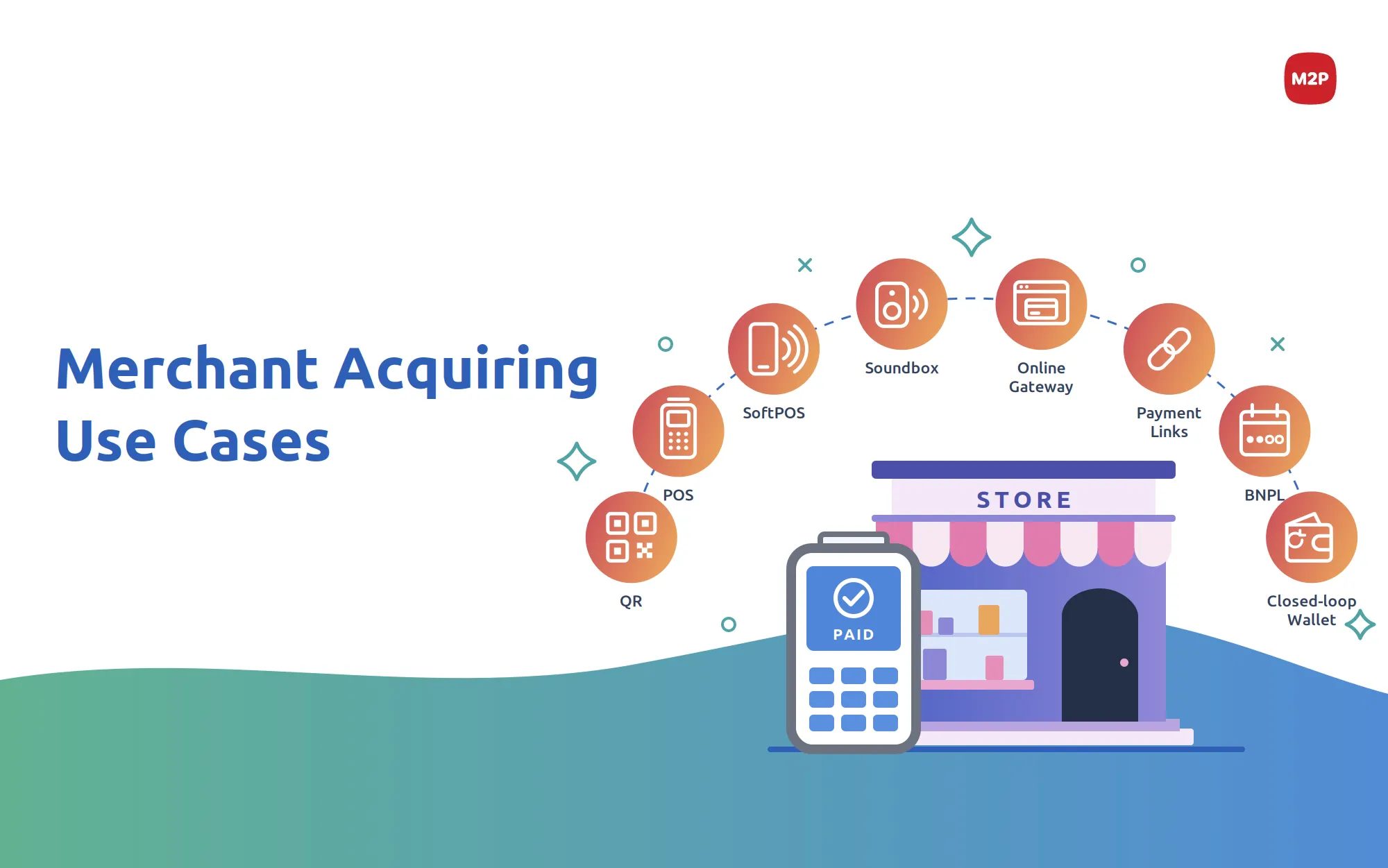
M2P's acquiring platform is designed as a single core system that natively supports cards, UPI, and wallet-based payments, rather than layering rail-specific add-ons onto a card-first architecture. A few ways this shows up in practice:
Unified merchant onboarding: Merchants onboard once through a consolidated KYB and risk-check process, and are activated across the payment rails relevant to their business — without separate onboarding cycles per rail.
Consolidated settlement and reconciliation: Transactions across cards, UPI, and wallets flow into a common settlement engine, giving merchants (and the acquiring bank's finance teams) one clean view instead of fragmented, rail-by-rail reports.
Cross-rail risk and fraud monitoring: Our FRM capability is built to evaluate merchant transaction behavior across all active rails together, so fraud signals aren't missed because they showed up on a different payment channel than the one being watched.
A single merchant dashboard: Merchants get one place to track transactions, settlements, and disputes — regardless of which rail the customer paid through.
API-first integration: Banks and PSPs can plug into M2P's acquiring stack through a consistent set of APIs, whether they're enabling card acceptance, UPI QR acceptance, or wallet payments, reducing the integration burden on their engineering teams.
The result is that banks and PSPs partnering with M2P aren't choosing between rail coverage and operational simplicity — they get both, from a platform already built to handle the complexity underneath.
As payment behavior continues to diversify — and as new rails or interoperability mandates inevitably emerge — the acquirers best positioned to adapt will be the ones running on infrastructure designed for multi-rail from day one, not the ones retrofitting new channels onto legacy, card-only cores.
For banks and PSPs evaluating their acquiring stack, the question worth asking isn't "can this platform support UPI or wallets too?" It's "was this platform built to treat every rail as a first-class citizen?"
Ready to simplify multi-rail acquiring for your merchants?
Talk to our team about how M2P's Merchant Acquiring Solution can help you accept cards, UPI, and wallet payments on one unified platform.
Tags
Fintech is evolving every day. That's why you need our newsletter! Get the latest fintech news, views, insights, directly to your inbox every fortnight for FREE!