

M2P Fintech
Fintech is evolving every day. That's why you need our newsletter! Get the latest fintech news, views, insights, directly to your inbox every fortnight for FREE!
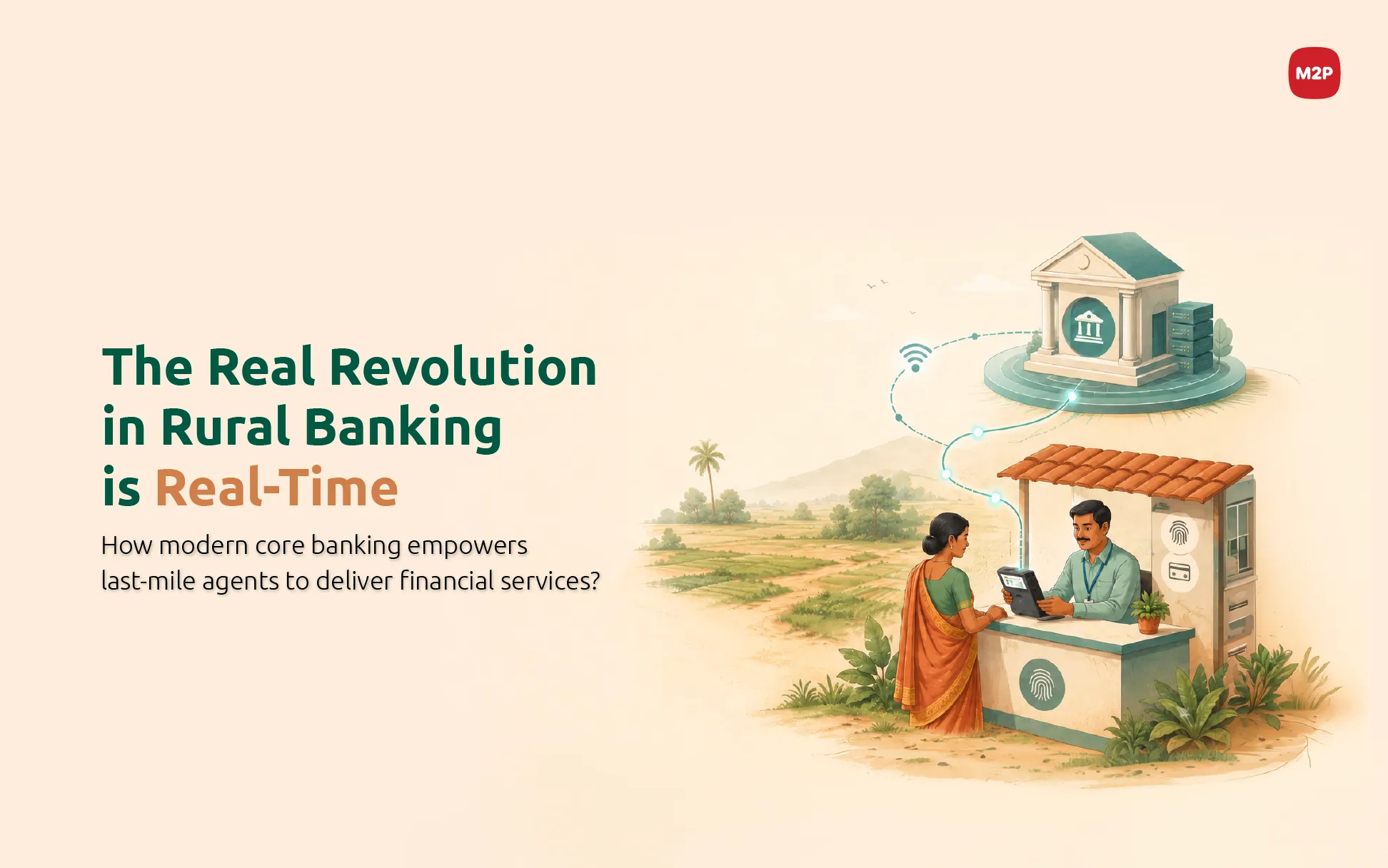
In the ongoing story of India's digital transformation, a quiet but powerful change is reshaping financial services in rural and semi-urban areas. This isn't just about new mobile apps; it's about the fundamental technology empowering cooperative banks to reach the unbanked and underbanked. For decades, these institutions have been the financial backbone of India's rural communities, but they have faced significant historical hurdles, including infrastructural gaps, unique economic pressures, and social challenges like low financial literacy.
Modern core banking platforms, such as M2P Fintech's Turing, are at the forefront of a movement to overcome these barriers, enabling institutions like The Gayatri Co-Operative Urban Bank Ltd. to redefine financial access. This blog explores how this synergy is upgrading banking technology for the last mile. We'll examine the journeys of two forward-thinking institutions, The Gayatri Co-Operative Urban Bank and Adarsh Co-operative Urban Bank, and dissect the critical difference between traditional offline transaction models and the real-time systems that are truly changing the game. We will also look ahead to see how this technological foundation is paving the way for the next evolution of rural finance, the "BC 2.0" model.
A Core Banking System (CBS) is a centralized software platform that allows a bank to manage all its operations in a "Centralized Online Real-time Environment" (CORE). This means every transaction, whether at a branch or through a digital channel, is updated instantly on a central server. For rural banking, a robust CBS is the foundational prerequisite for financial inclusion, as it allows banks to extend services beyond costly physical branches through models like agent banking, also known as the Business Correspondent (BC) model.
Recognizing this, the Reserve Bank of India (RBI) and the National Bank for Agriculture and Rural Development (NABARD) have championed technological modernization as a crucial step toward financial inclusion.
This regulatory push is guided by several key directives:
Core Banking Solution (CBS) Mandate: The RBI has mandated that all cooperative banks adopt a CBS and has offered financial assistance to facilitate this transition, moving them from outdated, branch-centric systems to a modern, centralized architecture
Technology Vision for Cyber Security: For Urban Co-operative Banks (UCBs), the RBI released its "Technology Vision for Cyber Security, 2020-2023," a five-pillared strategy named GUARD (Governance, Utile Technology, Appropriate Regulation, Robust Collaboration, Developing skills) to bolster cybersecurity
Computerization of PACS: For Rural Co-operative Banks (RCBs) and the broader rural credit ecosystem, NABARD is driving a massive government project to computerize approximately 63,000 Primary Agricultural Credit Societies (PACS). This initiative aims to integrate these grassroots-level societies, which serve 13 crore farmers, into the national CBS framework via a common ERP-based software, enhancing their efficiency, transparency, and ability to offer diverse services
This regulatory push sets the stage for next-generation Core Banking Solutions like M2P's Turing to make a significant impact.
M2P Fintech's Turing is a paradigm shift in banking technology . Built on a modern, micro-services architecture, it is an API-first, cloud-agnostic platform that provides a flexible, scalable, and secure foundation for banks to build and offer a full suite of modern financial services.
Agility and Speed: The platform's low-code nature allows banks to design and launch new products with unprecedented speed
Seamless Integration: As an API-first platform, Turing easily connects with a vast ecosystem of fintech partners and services, including UPI, card issuance, and mobile banking
Future-Proofing: Its modular architecture ensures banks can adapt and integrate new technologies and frameworks like AI, blockchain, the Open Credit Enablement Network (OCEN), and the Account Aggregator (AA) framework as they emerge, future-proofing their operations
Enhanced Security: Features like a pre-integrated Fraud Risk Management (FRM) engine provide a secure environment for all banking operations
The Gayatri Co-Operative Urban Bank Ltd., a prominent cooperative bank in Telangana, serves as a powerful case study for this transformation. The bank successfully migrated its operations from a legacy system to the M2P Turing platform. Turing CBS' real-time processing capabilities have significantly improved efficiency and customer service, positioning the bank for future growth.
Aadhaar Enabled Payment System (AePS): M2P implemented its AePS solution for Gayatri Bank to specifically cater to its customer base, which includes senior citizens and less tech-savvy individuals in remote areas. This system, developed by the NPCI, allows customers to perform transactions using only their Aadhaar number and biometric authentication (like a fingerprint scan). Aadhaar linked account number was taken from the Core Banking System and the amount was either debited or credited
Immediate Impact: On the very first day the AePS service went live, the bank onboarded over 500 business correspondents from remote locations, demonstrating immediate scalability
Walking ATMs: A key part of Adarsh Bank's rural strategy involved equipping field agents with mobile technology, turning them into "walking ATMs" who could travel through villages to collect deposits. This initiative, an early form of the BC model, reportedly increased agent efficiency and daily transactions
Digital Services: The bank has been proactive in offering a range of digital services, including issuing RuPay Debit Cards, launching a mobile app with IMPS, and providing biometric ATM access to support its target demographic of lower-income groups in rural areas
For a bank like Adarsh, with its established focus on rural outreach and technology, a modern core platform like Turing acted as a logical next step to further enhance its capabilities and prepare for the next wave of digital finance.
The end-of-day (EOD) filing mechanism as a potential game-changer for areas with poor connectivity. This method, known technically as the 'store-and-forward' model, has been a traditional approach to this challenge, actively promoted by the RBI. However, the case of Gayatri Bank and the broader evolution of the BC model reveal a more modern and powerful solution.
The 'store-and-forward' system is designed specifically for low-connectivity environments. Here's how it typically works:
Offline Capture: A Business Correspondent (BC) uses a handheld device (like a micro-ATM) to initiate a transaction for a customer in a remote area without internet
Local Storage: The device captures the transaction details, authenticates the customer (often via a smart card), encrypts the data, and stores it securely in the device's local memory. A receipt is issued, but the transaction is not yet processed by the bank
Synchronization: Later, when the agent reaches an area with network connectivity, the device uploads the entire batch of stored transactions to the bank's server
EOD Batch Processing: These offline transactions are then processed by the Core Banking System (CBS) in a single batch, usually at the end of the day. The system then reconciles the agent's and customers' accounts
Risk of Failure: A transaction can be declined hours later during batch processing due to insufficient funds, leading to customer disputes and eroding trust. Transaction failures due to technical issues are already a major problem, with one report citing an average failure rate of 39% for AePS transactions in April 2020
Delayed Settlement & High Costs: The time lag creates confusion for customers and liquidity management problems for agents, whose funds are tied up until reconciliation is complete. This is compounded by the high costs of cash handling (transportation and security) and the meager commissions earned on low-value rural transactions, making the business financially precarious
Security Risks: Storing transaction data on a local device, even if encrypted, introduces a risk of data breach or fraud if the device is lost, compromised, or subjected to attacks like biometric cloning
Operational Hurdles: Agents already face issues with low commissions, the high cost of cash management, and the need for reliable connectivity, all of which are made worse by the delays and risks of an offline system
The M2P Turing platform used by Banks represents a superior approach. The sources indicate Turing is a "24*7 CBS, with no offline mode". Instead of relying on the delayed 'store-and-forward' model, the strategy is to empower a network of local agents to conduct real-time, authenticated transactions.
Business Correspondents as Hubs: Bank's strategy relies on a network of business correspondents (BCs)—often local shopkeepers or "Bank Mitras"—equipped with a micro-ATM device and a biometric scanner
AePS for Real-Time Transactions: A customer in a remote village can visit a correspondent and perform a transaction instantly using their Aadhaar number and a thumb impression. The transaction is authenticated and processed in real-time via the agent's connectivity
Bypassing Customer-Side Hurdles: This model brilliantly overcomes the primary obstacles of rural banking. The customer does not need a smartphone, a data plan, a physical card, or even to remember a PIN. The technological burden is shifted to the correspondent, who acts as a human ATM and a trusted local touchpoint
Ensuring Service Continuity: By enabling secure, real-time biometric transactions through an agent network, the bank ensures that services are always available without the delays, risks, and confusion associated with EOD batch processing. This "phygital" approach, blending a physical agent with digital infrastructure, is key to building trust and adoption
This shift from delayed batch processing to an agent-led, real-time model is the core innovation enabling true last-mile financial inclusion.
The modernization of core banking is not an end in itself; it is the foundation for the next evolution of rural finance. The current BC model, while crucial, is often financially unsustainable for agents. The future lies in transforming the BC from a simple transactional agent into a tech-enabled financial advisor—the "BC 2.0".
A modern core platform like Turing is the engine that enables this shift by allowing banks to offer a wider range of products through their agent network:
Digital Micro-credit: By integrating with frameworks like the Open Credit Enablement Network (OCEN) and using AI-powered credit scoring based on alternative data, banks can offer instant, small-ticket loans. The BC agent would help customers apply for and manage these loans, earning a better commission
Micro-insurance and Investments: The BC 2.0 can become a one-stop shop for financial products, helping rural customers access insurance for crops, health, and livestock, as well as micro-investment products. Technologies like IoT for real-time crop data and blockchain for automated smart-contract-based claim settlements will make these products more viable and efficient
Advisory and Literacy: As technology automates basic transactions, the BC's role will shift to providing guidance, promoting financial literacy, and building trust in new digital products. They can use the Account Aggregator (AA) framework to help customers consolidate their financial data and receive personalized advice
This evolution to a "phygital" model, where the trusted human agent is empowered by powerful digital tools, will make the BC business more financially viable and dramatically deepen financial inclusion.
The modernization of India's cooperative banks, driven by mandates from the RBI and NABARD, is pivotal to achieving comprehensive financial inclusion and overcoming historical infrastructural and social barriers. M2P Fintech's Turing platform exemplifies the kind of modern core banking technology enabling this transformation. The success of The Gayatri Co-Operative Urban Bank Ltd. showcases the power of this shift.
Crucially, this case study reframes the solution for poor connectivity. While the traditional 'store-and-forward' model with End-of-Day (EOD) batch processing has been a necessary tool, it comes with significant challenges, including transaction failure risks, settlement delays, and a financially unsustainable model for agents due to high costs and low commissions. The true game-changer, as demonstrated by Gayatri Bank, is not this offline model but a sophisticated, real-time system. This model empowers local business correspondents (BCs) to serve customers who lack phones or internet, using instant, biometrically authenticated transactions.
This agent-led, real-time "phygital" approach delivers secure and immediate financial services to the true last mile, combining human trust with digital efficiency. Furthermore, this technological foundation is paving the way for the evolution of the agent into a "BC 2.0"—a tech-enabled advisor who can offer next-generation products like digital micro-credit, insurance, and investments, creating a more sustainable and deeply inclusive rural financial ecosystem.
Turing CBS is more than a core banking solution—it's a strategic enabler that helps modern banks, co-operative banks, payment banks and financial institutions accelerate digital transformation, enhance operational efficiency, and stay future-ready with a modern, scalable banking platform. Empower your bank to confidently align with the RBI’s vision for the future of banking.
Ready to transform your banking operations? Contact us today to schedule a personalized demo and discover how Turing CBS can drive your digital journey.

Fintech is evolving every day. That's why you need our newsletter! Get the latest fintech news, views, insights, directly to your inbox every fortnight for FREE!