

M2P Fintech
Fintech is evolving every day. That's why you need our newsletter! Get the latest fintech news, views, insights, directly to your inbox every fortnight for FREE!
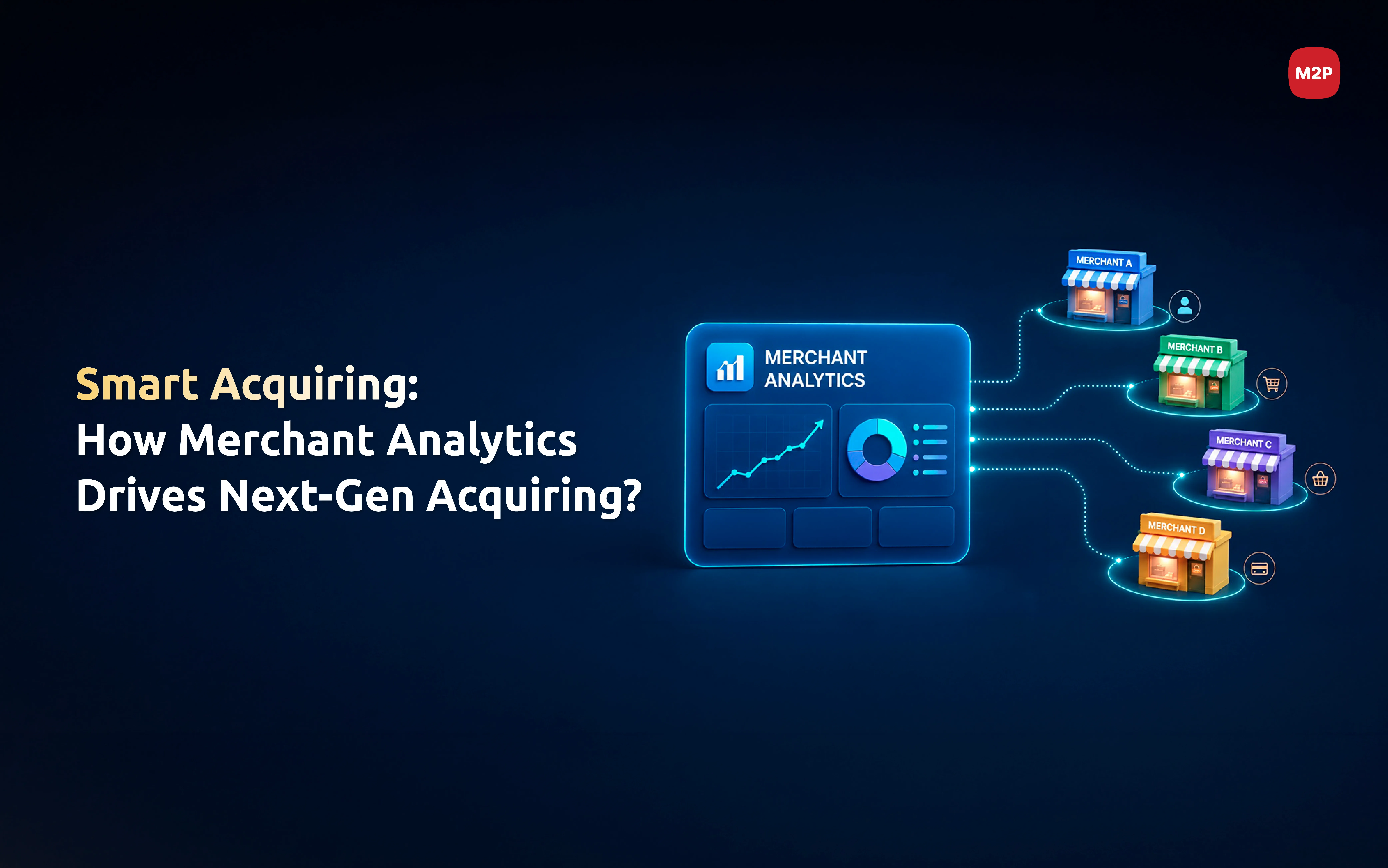
In today's competitive commercial landscape, data has surpassed oil as the most valuable resource. For merchant acquirers, who sit at the heart of digital transactions, this "new gold" presents an unprecedented opportunity to revolutionize their operations and deliver unparalleled value to their merchant clients. The traditional role of an acquirer as a mere payment processor is rapidly becoming obsolete as the service becomes commoditized. The future of acquiring lies in the intelligent use of merchant analytics, transforming vast streams of transaction data into actionable insights that drive growth, mitigate risk, and create new, higher-margin revenue streams. This analytics-driven approach is not just a trend; it's a fundamental shift that is reshaping the acquiring industry from the ground up.
Every time a customer makes a purchase, a wealth of data is generated. This transactional data, once considered a simple byproduct of payment processing, is now the bedrock of modern merchant analytics. Acquirers are uniquely positioned to harness this data, with leading platforms like M2P’s Merchant Acquiring Solutions championing a "Unified Commerce" approach that consolidates all payment data from every sales channel—online, mobile, and in-store—into a single system. This creates a "single source of truth" that provides both acquirers and their merchants with a treasure trove of insights, breaking down the data silos that traditionally separate e-commerce and physical retail operations. By moving from intuition-based decisions to an informed, strategic approach, merchants can unlock tangible business growth.
Identify Sales Trends and Optimize Profitability: Advanced reporting and analytics dashboards allow merchants to evaluate financial performance by spotting daily, weekly, or seasonal spikes in sales. Specialized modules like Recon360 even allow merchants to do reconciliation and audit all deducted fees and analyze product-level profitability to understand the true margin on each item sold.
Understand Customer Behavior: A unified view of transactions allows businesses to move beyond simple reconciliation to identify trends in what, when, and how customers buy. This reveals valuable information about customer preferences, average transaction value, and purchase frequency, allowing merchants to tailor their offerings.
Optimize Operations and Staffing: By analyzing transaction volumes and peak hours, businesses can make informed decisions about staffing and opening hours.
Streamline Data Analysis with AI: Modern platforms are making data more accessible through AI-native infrastructure. Instead of engineers manually sifting through logs, AI-powered systems continuously monitor operational data to automate root cause analysis for failed transactions
AI Query Tools: AI-driven tools like a "Query Chatbot" allow users to ask complex questions in plain English, such as "What is the status of transaction ABC123?"
Automated Diagnostics: A "Diagnostics Expert" AI can automatically query a transaction record, read the specific decline code, and explain the reason for failure (e.g., insufficient funds, issuer block) in plain language in seconds. This automates what was once a high-anxiety support ticket, with some AI systems reducing Mean Time to Resolution (MTTR)
The digital payments ecosystem is a prime target for fraudsters, making risk management a critical function for acquirers. Merchant analytics, powered by artificial intelligence (AI) and machine learning (ML), enables a more proactive and sophisticated approach to risk scoring and fraud detection. This is crucial for detecting complex fraud like account takeovers, bot activity, and social engineering scams. Adyen's analysis reveals that fraud is becoming more concentrated, with just 5% of fraudulent identities driving 58% of total fraud value, highlighting the need for precision tools:
AI-Powered Risk Platforms: Acquirers leverage the network effect of their platforms to enhance security. Adyen's risk management tool, Protect, uses ML models trained on its vast global transaction data to evaluate the risk of each payment in real-time. Every transaction processed across all merchants improves the model's accuracy, benefiting the entire ecosystem. The impact is significant; for example, JP Morgan Chase implemented an AI model that reduced false positives in fraud detection by 50%
Behavioral Biometrics: A cutting-edge technique is behavioral biometrics, which identifies users based on how they interact with their devices. This technology passively captures thousands of micro-behaviors—like typing cadence, mouse movements, and device orientation—to create a unique "digital fingerprint" that is extremely difficult for fraudsters to replicate. If a fraudster uses stolen credentials, their different behavioral patterns trigger a high-risk score in real-time, allowing the system to block the action before a loss occurs
In a commoditized market, personalization is a key differentiator. Acquirers are moving away from a one-size-fits-all approach, instead using data intelligence platforms to offer customized services that meet the unique needs of each merchant:
Hyper-Personalized Marketing: By analyzing customer spending habits, acquirers help merchants create hyper-personalized marketing campaigns and loyalty programs. A supermarket group tripled its conversion rate by using demographic data to personalize email campaigns, while a European retail chain achieved an 11% increase in online sales using similar tactics
Dynamic Checkout Personalization: Advanced platforms can personalize the checkout experience itself. Adyen's Personalize tool uses real-time data to dynamically reorder payment methods based on a shopper's known preferences or highlight more cost-effective options for the merchant . This level of data-driven personalization has been shown to increase conversion rates by up to 6%
Dynamic Pricing for Merchant Fees: Perhaps the most impactful form of personalization is dynamic pricing for the Merchant Discount Rate (MDR). Instead of a static fee, acquirers now analyze a merchant's specific transaction data—including transaction volume, average ticket size, chargeback history, and card mix—to create a personalized rate. This allows for more transparent models like interchange-plus pricing, where merchants pay the base interchange fee plus a fixed acquirer markup. According to a McKinsey study, this analytics-based dynamic pricing can boost an acquirer's margins by 4–8%
The vast repository of transaction data is a valuable asset that can be monetized through a variety of value-added services (VAS), representing a significant opportunity for acquirers to generate new revenue beyond traditional transaction fees.
Acquirers are employing several business models to monetize data, which can be categorized as either direct (selling data products) or indirect (using data to improve existing services)
Data-as-a-Service (DaaS): This involves packaging and selling aggregated, anonymized data sets or insights:
Target Customers: The primary customers are institutional investors, particularly quantitative hedge funds, who use this "alternative data" to gain a competitive edge and generate alpha. In 2022, 78% of hedge funds were using such data
Insights Offered: This data allows for "nowcasting"—predicting macroeconomic indicators like GDP and retail sales in near real-time, long before official statistics are released
Providers: While acquirers are the source, specialized firms like Bloomberg Second Measure, Envestnet | Yodlee, and YipitData refine and sell these data products. Even neobanks like Revolut are entering this space
Value-Added Services (VAS) for Merchants: This is a common model where acquirers offer a suite of analytics tools to merchants, often on a subscription basis. These platforms can offer competitive benchmarking, allowing merchants to compare their performance against anonymized competitors
Platform as a Marketplace: A powerful model is the creation of "app stores" where acquirers integrate third-party services, generating revenue through partnerships and revenue sharing:
Many payment and commerce platforms operate app marketplaces that provide SMBs with access to a wide range of third-party applications, such as analytics, accounting, inventory management, employee scheduling, and business management tools. These marketplaces typically use revenue-sharing models, where developers receive a portion of app sales revenue, while the platform retains a percentage as a marketplace fee. Some platforms also offer additional incentives, such as referral rewards, to encourage developers to attract new merchants and expand the ecosystem.
Pricing for these services is typically structured as recurring subscription plans (often tiered), usage-based pricing, or a fixed fee for a specific project.
The monetization of data must be done responsibly and ethically, with a strong focus on data privacy and security. This is not just a legal obligation but a competitive advantage that builds customer trust. Key principles include:
Regulatory Compliance: Acquirers must adhere to strict data protection laws like Digital Personal Data Protection Act (DPDP) GDPR in Europe and CCPA in the United States
Thorough Anonymization: Before any data is used or sold, it must be fully anonymized to prevent re-identification. Techniques include removing personal identifiers, hashing, aggregation, and generating synthetic data that mimics real statistical properties
Transparency and Consent: Customers must be clearly informed about how their data is used, and explicit opt-in consent is often required. Regulations grant consumers the right to access their data and the right to be forgotten
The acquiring landscape is undergoing a profound transformation, driven by the power of merchant analytics. By harnessing the "new gold" of transaction data, acquirers are moving beyond the role of simple payment processors to become strategic intelligence partners. This evolution is defined by providing deep business insights and deploying sophisticated, real-time fraud protection using advanced technologies like behavioral biometrics. Acquirers are leveraging the network effect of their global data to train ML risk models, which is critical in an environment where just 5% of fraudulent identities account for 58% of fraud value. The ability to deliver hyper-personalized services, such as dynamic pricing for the Merchant Discount Rate (MDR) that can boost acquirer margins by 4-8%, is what now defines a leading acquirer. Furthermore, the integration of AI chatbots that can diagnose failed transactions in seconds is revolutionizing merchant support, reducing resolution times by up to 80%. New revenue streams are being created through Data-as-a-Service (DaaS) offerings for hedge funds and the creation of "app store" ecosystems. However, this data monetization must be anchored in robust ethical frameworks like GDPR, ensuring privacy through techniques like data hashing and aggregation. Those who embrace this data-driven future will not only survive the commoditization of payments but will thrive, building stronger merchant relationships and securing a decisive competitive edge. The message is clear: for merchant acquirers, the future is not just about processing transactions; it's about leveraging the intelligence within them.
Ready to Transform Data into Revenue?
From merchant analytics and risk scoring to personalized merchant services and value-added offerings, M2P empowers acquirers to move beyond payments and become strategic growth partners for merchants.
Talk to M2P and see how our Merchant Acquiring platform can help you unlock new revenues, reduce risk, and deliver exceptional merchant experiences.
Fintech is evolving every day. That's why you need our newsletter! Get the latest fintech news, views, insights, directly to your inbox every fortnight for FREE!