

M2P Fintech
Fintech is evolving every day. That's why you need our newsletter! Get the latest fintech news, views, insights, directly to your inbox every fortnight for FREE!
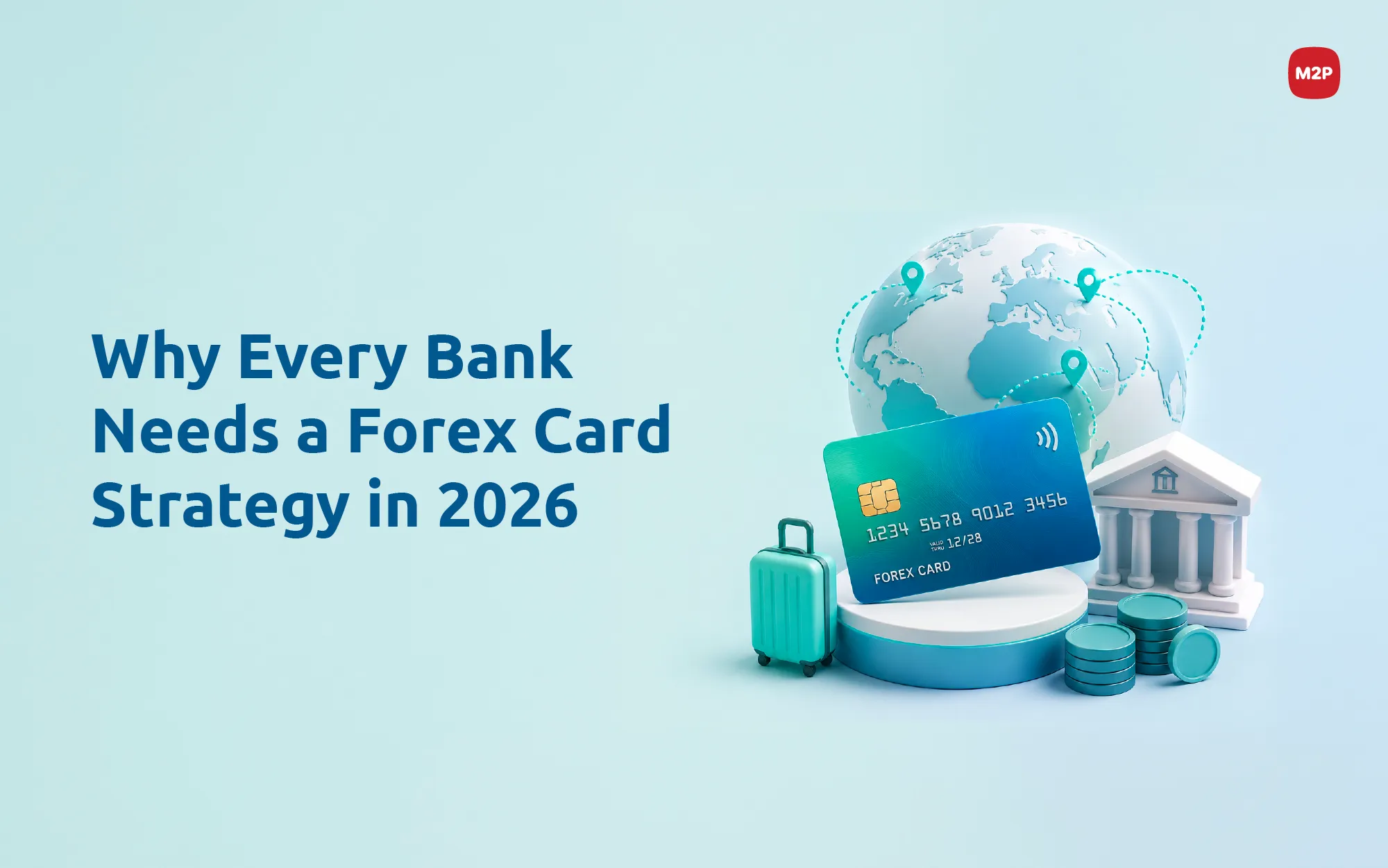
More people are traveling, studying, and working abroad than ever before. And every time someone crosses a border, they need a simple way to spend money in a different currency. This is exactly the gap a forex card fills.
For banks, this isn't just a nice-to-have product anymore. It's becoming a core part of serving customers who live global lives. Having worked with banks and fintechs on building this exact stack, we've seen firsthand where forex card programs succeed and where they stumble - and most of the time, it comes down to the platform behind the card, not the card itself. In this blog, we'll look at why forex cards matter, how they work, and what banks need to know about forex card issuance and building a strong forex card platform.
A forex card is a prepaid card loaded with foreign currency, which customers can use to spend, withdraw cash, or make online payments while traveling abroad. Unlike a regular debit or credit card, a forex card locks in the exchange rate at the time of loading, protecting customers from daily currency fluctuations.
Many modern forex cards are also multi-currency prepaid cards, meaning customers can load multiple currencies onto a single card and switch between them depending on which country they're in.
1. Outbound travel is growing fast
More people are traveling internationally for leisure, business, and education every year. Every one of these travelers needs a way to manage foreign currency, and banks that don't offer a forex product are missing this opportunity entirely.
2. Customers expect it as part of their banking relationship
Today's customers don't want to visit a separate forex counter or use a third-party app to convert currency. They expect their bank to offer this service directly, right alongside their savings account and credit card.
3. It strengthens cross border payments capabilities
Forex cards are a key part of a bank's broader cross border payments strategy. They give customers a reliable way to spend abroad without relying on international transaction fees on regular debit cards, which are often expensive and unpredictable.
4. It opens up a new revenue stream
Forex cards allow banks to earn through currency markup, loading fees, and reload charges - all while offering a genuinely useful product to customers.
5. It builds loyalty among high-value customers
Frequent travelers, students studying abroad, and business professionals tend to be high-value customers. Offering them a smooth forex card experience keeps them within the bank's ecosystem instead of switching to a fintech competitor.
Many customers still use their regular debit or credit card while traveling, not realizing how much extra they're paying. Here's the difference:
Exchange rate: Forex cards lock the rate at the time of loading. Debit and credit cards apply the rate at the time of transaction, which can vary and often includes a markup.
Foreign transaction fees: Regular cards usually charge 2-4% on every international transaction. Forex cards are designed specifically to avoid this.
Budget control: Since forex cards are prepaid, customers only spend what they've loaded, avoiding surprise charges or overspending.
Safety: If a forex card is lost or stolen, the loss is limited to the loaded balance, unlike a credit card linked to a larger credit limit.
This is why more customers are actively looking for forex cards instead of relying on their regular banking cards while abroad.
Launching a forex card program isn't just about adding a new product to the catalog. Banks need the right forex card platform to make it work smoothly. Based on programs we've helped banks launch, here's what actually determines whether a forex card program takes off or stalls:
1. Multi-currency support
Customers should be able to load and hold multiple currencies on a single multi-currency prepaid card, switching automatically based on where they're spending.
2. Regulatory compliance
Forex card issuance involves RBI guidelines (or the relevant regulator in the bank's country), FEMA compliance, and reporting requirements. A strong forex card platform should have these built in.
3. Real-time rate locking
Customers expect transparent, real-time exchange rates when they load their card. Delayed or unclear pricing leads to poor customer experience and complaints.
4. Seamless reload and top-up options
Customers should be able to reload their forex card easily through net banking, UPI, or the bank's app - without needing to visit a branch.
5. Strong fraud and security controls
Since forex cards are used internationally, banks need robust fraud detection, card freezing options, and instant alerts to protect customers while they're abroad.
6. Easy integration with existing banking apps
A modern forex card platform should integrate directly into the bank's existing mobile app, so customers don't need to download or manage a separate application.
In our experience, the banks that get this right usually aren't building all six of these from scratch - they're partnering with a forex card platform that already handles compliance, rate-locking, and fraud controls, so the bank's team can focus on the customer experience layer instead.
International travelers: For holidays, business trips, and family visits abroad.
Students studying overseas: Who need a reliable way to manage tuition-related spends and daily expenses in a foreign currency.
Business professionals: Who travel frequently and need predictable, trackable forex spending.
NRIs and expats: Who manage money across multiple countries and currencies regularly.
Each of these segments represents a meaningful, recurring revenue opportunity for banks that get their forex card strategy right.
As more customers live, work, study, and travel across borders, forex cards are quickly becoming a core banking product rather than a niche add-on. For banks, offering a well-built multi-currency prepaid card isn't just about convenience - it's about staying relevant to a customer base that increasingly thinks and spends globally.
Banks that invest in the right forex card platform and get forex card issuance right will be better positioned to serve these customers and strengthen their overall cross border payments offering.
If your bank is exploring how to launch or upgrade a forex card program, M2P's forex card platform handles multi-currency support, compliance, and real-time rate locking out of the box - so you can focus on the customer experience. Talk to our team to see how a modern card stack can fit into your roadmap.
What is the difference between a forex card and a multi-currency prepaid card?
A forex card is typically loaded with one foreign currency, while a multi-currency prepaid card lets customers hold and switch between several currencies on the same card. Most modern forex cards now come with multi-currency capability built in.
What compliance requirements apply to forex card issuance?
Forex card issuance is subject to regulatory guidelines such as RBI norms and FEMA compliance (in India), along with reporting requirements that vary by country. A strong forex card platform builds these checks into the issuance flow so banks don't have to manage them manually.
Can customers reload a forex card without visiting a branch?
With a well-built forex card platform, yes. Customers should be able to reload via net banking, UPI, or directly through the bank's mobile app.
Who benefits the most from a forex card?
International travelers, students studying abroad, frequently traveling business professionals, and NRIs/expats managing money across countries all benefit from the predictability and cost savings a forex card offers.
Should banks build a forex card program in-house or partner with a platform?
Most banks find it faster and more reliable to partner with a forex card platform that already handles compliance, rate-locking, and fraud controls - letting the bank's team focus on customer experience and app integration instead of building infrastructure from scratch.
Fintech is evolving every day. That's why you need our newsletter! Get the latest fintech news, views, insights, directly to your inbox every fortnight for FREE!