

M2P Fintech
Fintech is evolving every day. That's why you need our newsletter! Get the latest fintech news, views, insights, directly to your inbox every fortnight for FREE!
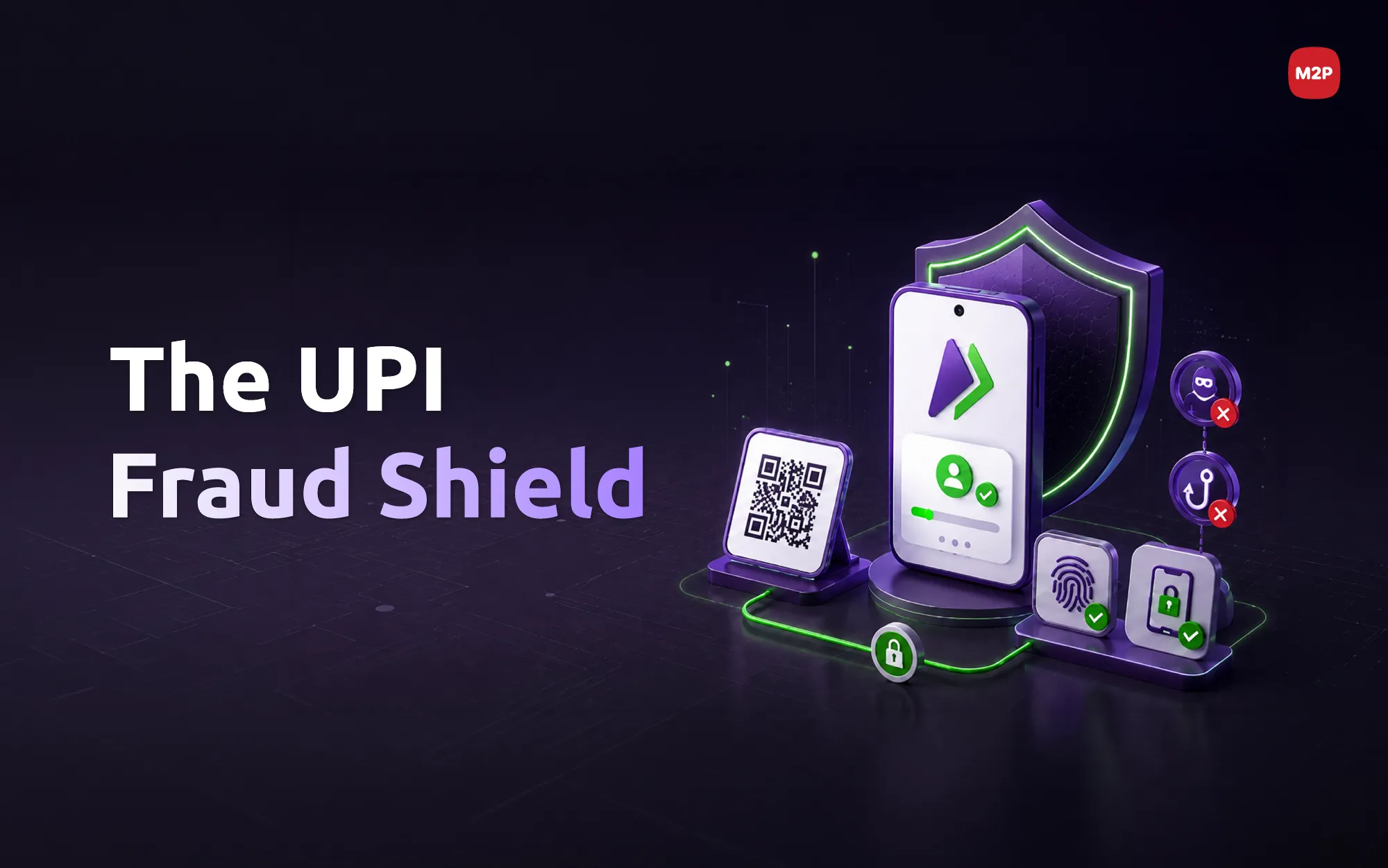
The Unified Payments Interface (UPI) has undeniably transformed India's financial landscape, cementing its position as the backbone of the nation's digital economy. Its seamless, real-time, and interoperable system has empowered millions, making digital transactions as easy as sending a text message. The growth has been nothing short of explosive; in the fiscal year 2023-24, UPI processed a staggering 131 billion transactions with a total value of ₹199.89 trillion. With a user base exceeding 400 million as of June 2024, this upward trajectory is projected to continue, with UPI expected to account for 90% of all retail digital payment volumes within the next five years.
However, this convenience has a dark side: the alarming rise of UPI-related fraud. The rapid proliferation of UPI has created fertile ground for fraudsters looking to exploit unsuspecting users. Since the 2022-23 fiscal year, UPI-related scams have led to cumulative losses of ₹2,145 crore across 2.7 million reported incidents. These scams not only lead to significant financial losses but also risk eroding the hard-won trust in our digital payment ecosystem. This post will delve into the common types of UPI fraud, explore the robust prevention measures being implemented by the National Payments Corporation of India (NPCI), and highlight how advanced solutions like M2P's Fraud and Risk Management (FRM) are creating a safer transaction environment.
Fraudsters are constantly evolving their methods, often relying on social engineering, manipulating human psychology, rather than technical hacking. Awareness is the first and most crucial line of defense. Here are some of the most prevalent UPI scams to watch out for:
Phishing Scams: This is one of the most common methods. Fraudsters send deceptive emails, SMS, or social media messages that mimic legitimate banks or payment services. These messages often create a sense of urgency, prompting you to click a malicious link to update details or verify your account. The link leads to a fake website where entering your UPI PIN or other credentials gives scammers direct access to your account
QR Code Fraud (Quishing): Scammers exploit the convenience of QR codes in several ways. They might send you a QR code via WhatsApp, claiming you need to scan it to receive money. However, scanning a QR code and entering your PIN is always for making a payment, not receiving one. Unsuspecting users authorize a debit from their own account. Another tactic involves physically pasting a fake QR code sticker over a genuine one at a shop or donation box, redirecting payments to the scammer's account
The "Request Money" Trap: Fraudsters misuse the "Collect Request" feature on UPI apps. Posing as a buyer for an item you're selling online, or pretending to issue a refund, they send a payment request. They then pressure you to approve the request and enter your PIN to "receive" the funds. In reality, approving the request authorizes them to pull money from your account. To combat this, NPCI is phasing out the 'Collect Payments' feature for most person-to-person transactions and capping it at ₹2,000
Fake UPI Payment Screenshot Scam: A highly prevalent scam targeting merchants involves fake payment screenshots.
How it Works: A fraudster makes a purchase and, instead of paying, uses a photo editing app or a "spoof" payment generator tool to create a fake "payment successful" confirmation screen. These forged screenshots meticulously mimic the interface of apps like PhonePe or Google Pay, complete with a transaction ID and amount. The scammer shows this fake proof to the merchant, often creating a sense of urgency during busy periods, and leaves with the goods before the merchant realizes the money was never credited
How Merchants Can Protect Themselves: The core principle is to never trust the customer's phone screen as proof of payment. Instead, merchants should:
Confirm on their own device by checking their UPI business app's transaction history or bank account for a credit confirmation
Use a UPI Soundbox for instant, audible confirmation of received payments, which is highly effective in busy environments
Educate all staff to follow a strict verification process and never release goods based solely on a customer's screenshot
Check for official SMS and in-app notifications from their bank or payment app
Remote Screen Access Scams: This is a particularly invasive scam where a fraudster, often posing as a customer service representative, convinces you to download a remote access app like AnyDesk or TeamViewer. Once you grant access, they can see your screen, record your UPI PIN as you enter it, and later use it to drain your account
Vishing (Voice Phishing): Scammers call pretending to be bank officials or government agents. They create a false sense of urgency—claiming your account will be blocked or you need KYC verification—to trick you into revealing your UPI PIN, OTPs, or other sensitive details over the phone
SIM Swapping/Cloning: In this sophisticated attack, fraudsters obtain a duplicate SIM card for your registered mobile number, often by tricking the mobile operator with fake identity documents. With the duplicate SIM, they can intercept the OTPs required to authorize UPI transactions and gain control of your account. To combat this specific threat, NPCI has implemented a robust SIM binding protocol, which is explained in detail below
Fake UPI Handles and Apps: Scammers create fake UPI IDs that closely resemble legitimate business or personal IDs to trick you. They may also develop fraudulent apps that mimic genuine UPI platforms to steal your login credentials when you download and use them from unofficial sources
Faced with over 1.34 million reported fraud cases in FY24 alone, the National Payments Corporation of India (NPCI), the governing body of UPI, is at the forefront of the battle against fraud. It employs a multi-layered strategy that combines technological safeguards, stringent guidelines, and public awareness.
NPCI is deploying advanced Artificial Intelligence (AI) to proactively warn users of potentially fraudulent transactions before they are completed:
Federated AI Model: The core of this system is a federated AI model developed in a pilot project with major public and private sector banks. This collaborative model works by combining risk assessments from both NPCI and the banks without sharing sensitive raw customer data
NPCI's Model analyzes data from across the entire UPI network, focusing on transaction profiling (amount, frequency) and device profiling
Bank's Model analyzes customer-specific data, including demographics like age and occupation, and individual banking history
By exchanging only the resulting risk scores, the system can compare analyses, refine predictive accuracy, and significantly reduce "false positives" (incorrectly flagging legitimate transactions)
Real-Time Warning System: When a user initiates a transaction, the AI scans the details in real-time. If the system flags the transaction as high-risk, it communicates a warning directly to the payer within their UPI app. This alert appears as a pop-up or notification, often stating that the recipient's account is suspicious. This introduces a crucial pause, allowing the user to review the payment and cancel it if needed, shifting the paradigm from post-fraud detection to real-time prevention
Triggers for High-Risk Alerts: The AI system analyzes a variety of data points and behaviors to assign a risk score. An alert may be triggered by:
Recipient History: Sending money to a first-time recipient or an account previously flagged as fraudulent by other users
Abnormal Transaction Values: Payments that are unusually large compared to the user's typical spending habits
Unusual Transaction Timing: Payments initiated at odd hours when the user is normally inactive
Transaction Velocity: A sudden, sharp increase in the frequency of transactions
Device and Location Changes: A login from a new, unrecognized device or a transaction from a significantly different geographical location
At the core of UPI's security are mandatory, intertwined mechanisms that create a trusted and verified environment for every transaction. These features ensure a user's UPI profile can only be accessed from their specific mobile device and with their registered SIM card.
Device Binding: This security protocol cryptographically links a user's UPI profile to their smartphone. When a user registers for UPI, the app generates a unique digital "fingerprint" using the device's hardware identifiers. The process leverages the device's hardware-backed Keystore (on Android) or Secure Enclave (on iOS) to generate a cryptographic key pair. The private key is stored securely on the device, while the public key is sent to UPI servers. Every transaction is then digitally signed with this private key, allowing servers to verify it originated from the trusted device. This prevents a fraudster from using your credentials on a different phone
SIM Binding (or "SIM Fingerprinting"): This feature links your UPI account to your specific SIM card and mobile number, acting as a critical defense against SIM swap fraud. The verification works through a "silent SMS" mechanism:
During registration, the app sends a silent, one-time SMS containing a unique token from your device to a pre-defined Virtual Mobile Number (VMN)
The telecom operator receives this SMS and authoritatively confirms your mobile number (MSISDN) directly from their network, forwarding it to the bank's server via a secure webhook
The bank validates this number against your account records
Upon success, a signed SIM Binding Certificate (SBC) is generated and stored securely on the device
This process ensures the physical SIM in the phone is the one linked to the bank account, preventing unauthorized access from cloned or swapped SIMs. To further enhance security, NPCI disallows binding if the phone is in airplane mode, requires an active SIM even on Wi-Fi, and limits binding attempts to prevent attacks
While technology provides a strong defense, NPCI recognizes that user education is the first and most important line of defense against social engineering. The 'UPI Safety Shield' is a comprehensive public awareness initiative designed to instill safe digital payment habits:
Key Educational Messages: The campaign is built around simple, memorable safety principles:
‘Enter PIN = Money Deducted’: This fundamental message stresses that a UPI PIN is only for sending money, never for receiving it
Never Share Your UPI PIN or OTPs: This confidential information should never be shared with anyone, including those posing as bank or customer service staff
Verify Recipient Details: Always double-check the recipient's name and UPI ID before confirming a payment
Beware of Malicious Links and QR Codes: Do not click unsolicited links or scan QR codes from unknown sources asking for UPI details
Use Official Apps: Download UPI apps only from official sources like the Google Play Store or Apple App Store
Review Transaction History: Regularly check SMS alerts and bank statements for unauthorized activity
Use In-App Help: For any issues, use the official help section within your UPI app instead of searching for customer care numbers online, which may be fraudulent
Report Fraud Immediately: In case of fraud, contact your bank and report the incident on the cybercrime portal
Communication Channels and Strategy: To reach a diverse audience, the campaign employs a 360-degree media strategy:
Multimedia Dissemination: Safety messages are spread across television, print, radio, cinema, and digital/social media platforms like YouTube and Facebook. A dedicated microsite, UPIChalega.com, serves as an information hub
Brand Ambassador and Relatable Content: The campaign features Bollywood actor Pankaj Tripathi as the 'UPI Safety Ambassador' in a series of ad films produced in multiple languages. These films, like "Moongfaliwala," depict common fraud scenarios in a relatable way
Empowering Taglines: A specific initiative under this umbrella, the "Main Moorkh Nahi Hoon" ("I am not a fool") campaign, aims to empower users to recognize and resist scams
NPCI UPI Help portal - UPI Help
While NPCI provides the overarching security framework, specialized fintech players like M2P offer advanced Fraud and Risk Management (FRM) solutions that provide an additional, crucial layer of protection for financial institutions. M2P's FRM is a comprehensive, AI-powered system designed to move fraud management teams from a reactive to a proactive stance by pre-emptively identifying and mitigating risk in real-time across multiple channels.
A core strength of M2P's platform is its ability to break down data silos and create a single, unified view of a user's risk. Built on a modular, API-led architecture, it seamlessly integrates with disparate payment channels.
Unified Channel Monitoring: The platform ingests and analyzes data from channels including UPI, Cards (Credit/Debit), Net Banking, Buy Now, Pay Later (BNPL), Core Banking Systems, and Payment Gateways
Single Source of Truth: By correlating data from a user's card transaction, UPI payment, and net banking login, the system creates a "single source of truth" for all risk and fraud-related insights. This allows it to spot subtle, coordinated fraud patterns that isolated systems would miss
M2P's platform uses a hybrid approach, combining the adaptive power of AI with the precision of a configurable rule engine.
AI/Machine Learning Models: The AI/ML models are the proactive defense, analyzing vast datasets in real-time (with response times in the sub-400 millisecond range) to identify new and evolving fraud patterns that static rules cannot catch. This significantly reduces false positives and improves detection accuracy
Customizable Rule Engine: The platform features a user-friendly rule engine that allows financial institutions to configure specific rules tailored to their risk appetite. They can address known threats immediately and even upload historical data to test and fine-tune rules before deployment
A key innovation is the use of behavioral biometrics, which runs silently in the background to distinguish legitimate users from fraudsters without adding friction. The system analyzes a user's unique digital "body language" by tracking:
Device-Based Gestures: This includes keystroke dynamics (typing speed and rhythm), cursor movements (trajectory and speed), and touchscreen interactions (swipe patterns, scrolling habits)
Kinesthetics: The system can analyze physical movements like gait, posture, and how a user holds and handles their device
Voice Patterns: For voice-activated services, unique vocal characteristics like pitch and format can be analyzed for identity verification
By creating a unique behavioral profile, the system can instantly detect anomalies that suggest an account takeover, such as the automated, robotic movements of a bot versus the natural cadence of a human user.
Beyond real-time detection, M2P's FRM platform features a customizable case management module that automates and streamlines the entire lifecycle of a fraud investigation. This significantly reduces manual effort and accelerates response times.
Automated Workflows: The platform automatically flags suspicious transactions and creates cases, which can be prioritized as high, medium, or low. It automates case allocation to analysts, the initiation of blocking actions on compromised accounts, and resolution workflows
Centralized Investigation Hub: Each case file provides a unified view of all relevant information, including transaction details, user behavior analytics, and investigator notes, eliminating the need to gather data from disparate systems
Automated Customer Interaction: In some scenarios, the platform can automate parts of an investigation by interacting directly with customers via IVR, SMS, or WhatsApp to verify a transaction's legitimacy
M2P's FRM platform is built with a "baked-in" compliance architecture to help financial institutions meet complex regulatory requirements.
Automated Reporting: The platform offers automated report downloads and Secure File Transfer Protocol (SFTP) transfers for both compliance and internal reporting needs
Global and Local Frameworks: Its architecture supports compliance with a range of regulations, including GDPR, PCI DSS, and AML/KYC requirements set by bodies like the Financial Action Task Force (FATF) and the Office of Foreign Assets Control (OFAC)
Comprehensive Audit Trails: Every action taken within the platform is logged, creating a detailed and immutable audit trail for transparency and traceability during internal or external audits
AML and Sanctions Screening: The system integrates with AML solutions to screen customers against global watchlists (e.g., UN, OFAC/SDN) during onboarding and throughout their lifecycle
The platform transforms raw post-transaction data into actionable intelligence, enabling data-driven strategic decisions.
Unified Dashboards: Fraud management teams get a holistic view of fraud trends, rule performance, and operational metrics across all channels. Dashboards can be filtered by various parameters, including risk score and transaction outcome
Performance Monitoring: Teams can monitor the performance of fraud rules in real-time, allowing for continuous optimization to reduce false positives and improve detection accuracy
Strategic Decision-Making: The insights generated help institutions make informed decisions about fraud management strategies and resource allocation, with the ability to analyze profitability and audit fees to see the financial impact of mitigation efforts
The rapid digitization of payments through UPI has brought immense convenience, with transaction volumes reaching 131 billion in FY24. However, this growth is shadowed by a rise in financial fraud, with cumulative losses exceeding ₹2,145 crore since FY22-23. Scammers are increasingly using social engineering tactics like phishing, QR code manipulation, and the highly common fake payment screenshot scam to deceive users and merchants.
In response, a multi-pronged defense strategy is in place. NPCI, as the regulatory body, is strengthening the UPI ecosystem from the top down. Its technical defense is rooted in mandatory device and SIM binding, which uses cryptographic keys and a 'silent SMS' verification process to lock a user's profile to their specific phone and SIM card, effectively countering SIM swap fraud. This is complemented by a federated AI model that warns users of high-risk transactions in real-time.
Complementing these efforts are specialized solutions from Banking and Fintech experts like M2P, the Fraud and Risk Management (FRM) platform of M2P provides a sophisticated, AI-driven defense layer for financial institutions. By unifying fraud detection across all payment channels (UPI, cards, etc.) into a "single source of truth," it offers a holistic view of risk. The platform employs advanced behavioral biometrics—analyzing typing speed and swipe patterns—to distinguish legitimate users from bots in real-time. Beyond real-time detection, it offers a comprehensive suite of tools for post-incident response, including an integrated case management module to automate investigations and a robust framework for streamlined regulatory reporting and compliance with global standards.
Ultimately, securing the digital payments landscape is a shared responsibility. While regulators and technology providers build safer platforms, the final defense is an alert and informed user. By understanding the risks and adopting safe practices—like never trusting a screenshot and always verifying payments on your own device—we can all contribute to a more secure and trustworthy digital India.
Get in touch with us to explore how M2P’s AI-driven fraud detection platform helps financial institutions stay secure and a step ahead.
Follow us on LinkedIn and Twitter for insightful fintech bytes curated for curious minds like you.
Fintech is evolving every day. That's why you need our newsletter! Get the latest fintech news, views, insights, directly to your inbox every fortnight for FREE!