

M2P Fintech
Fintech is evolving every day. That's why you need our newsletter! Get the latest fintech news, views, insights, directly to your inbox every fortnight for FREE!
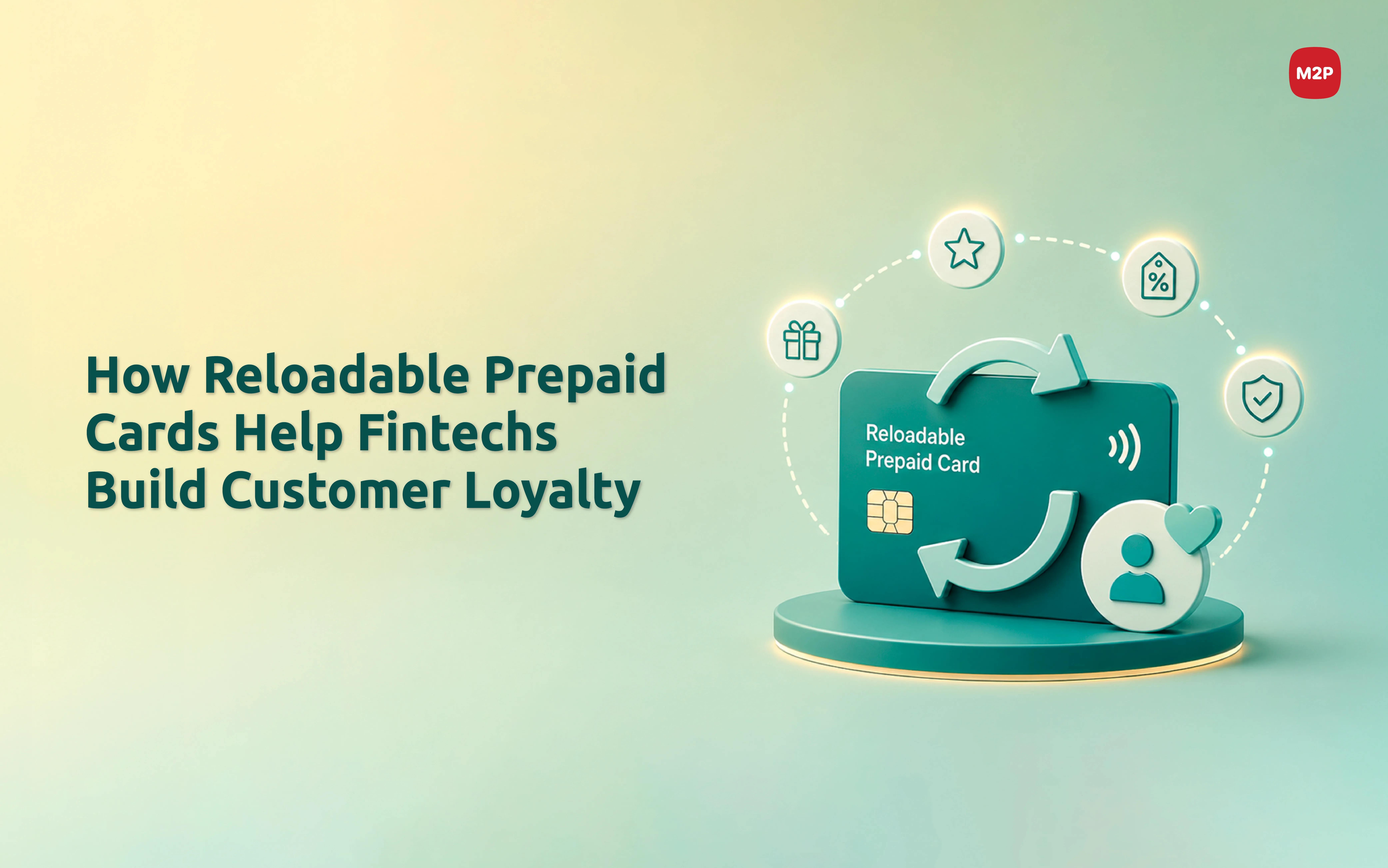
Every fintech wants the same thing: customers who don't just sign up, but stay. Getting someone to download an app is easy. Getting them to use it every month is hard.
This is where reloadable prepaid cards come in. Also known as GPR cards (General Purpose Reloadable cards), they give fintechs a simple way to keep customers coming back - without needing a full banking license or years of infrastructure building.
As a company that builds prepaid card infrastructure for banks and fintechs, we've seen this pattern repeat across dozens of programs: the fintechs that win on loyalty aren't the ones with the flashiest app. They're the ones where the underlying reloadable prepaid card system is fast, reliable, and invisible to the customer. In this blog, we'll break down what GPR cards are, why they work so well for loyalty, and how fintechs can build products people actually stick with.
A GPR card (General Purpose Reloadable card) is a prepaid card that customers can load money onto, spend from, and reload again - as many times as they want. Unlike a one-time gift card, a GPR card is built for repeat use.
Think of it like a digital wallet in card form. Customers top it up with money, use it for purchases, ATM withdrawals, or online payments, and reload it whenever the balance runs low.
For fintechs, this repeat reload behavior is exactly what builds habit. And habit is what builds loyalty.
Launching a full banking product takes time, licenses, and heavy compliance work. A reloadable prepaid card system lets fintechs skip most of that heavy lifting.
Here's why more fintechs are choosing this route:
Faster time to market: Fintechs can launch a card program in weeks, not years.
No need for a banking license: Most GPR programs run through a partner bank or BIN sponsor, so fintechs don't need to become a bank themselves.
Lower cost of entry: Building loyalty through a GPR card is far cheaper than building a full-stack banking product from scratch.
Flexibility: Fintechs can design the card program around their specific customer — students, gig workers, travelers, or everyday spenders.
This makes GPR cards one of the fastest ways for a fintech to launch a product that customers use regularly.
Loyalty isn't built through one great transaction. It's built through repeated, everyday touchpoints. Reloadable prepaid cards are designed exactly for that.
1. Repeat reloads create habit Every time a customer reloads their card, they're engaging with your app or platform again. This repeated action, done monthly or even weekly, naturally builds a habit loop.
2. Everyday usage keeps the brand top of mind Unlike a one-time purchase card, a GPR card gets used for groceries, fuel, subscriptions, and daily spends. Every swipe is a small brand touchpoint.
3. Rewards and cashback keep customers engaged Fintechs can layer cashback, discounts, or reward points on top of the card. Even small incentives — like 1% cashback on reloads — encourage customers to keep using the same card instead of switching to a competitor.
4. Instant issuance removes friction Customers don't want to wait days for a card to arrive. A modern reloadable prepaid card system allows instant virtual card issuance, so customers can start spending within minutes of signing up.
5. Personalization builds emotional connection Custom card designs, personalized offers, and app-based spend tracking make the card feel like it belongs to the customer — not just another piece of plastic.
Gig economy platforms: Workers get paid instantly onto a GPR card and use it for daily expenses, creating a natural reload-and-spend cycle.
Student and youth banking apps: Reloadable cards let young users manage pocket money independently, building brand loyalty early.
Corporate expense management: Employees reload cards for business spends, keeping the platform in daily use.
Neobanks: Many neobanks use GPR cards as their core product before expanding into full banking services.
Having built card programs for banks and fintechs across different customer segments, here's what we've consistently seen separate the programs that stick from the ones that don't:
Instant card issuance: Virtual card issuance in real time keeps onboarding friction low.
Strong compliance support: KYC, AML, and regulatory checks should be built into the system, not bolted on later.
Flexible reload options: Customers should be able to reload via UPI, net banking, cards, or cash - whatever works for your audience.
Easy integration: APIs that plug into your existing app without months of development time.
Scalability: The system should handle growth from a few thousand users to millions without breaking.
The programs that build real loyalty are almost always the ones where the fintech didn't have to compromise on any of these five - usually because the underlying reloadable prepaid card system was built to handle them from day one, not patched together later.
Loyalty isn't won with a single feature - it's built through repeated, everyday moments where a customer chooses your product again and again. Reloadable prepaid cards give fintechs exactly that: a simple, low-cost way to stay in a customer's daily life.
Whether you're building for gig workers, students, or everyday spenders, a well-built reloadable prepaid card system can turn a one-time sign-up into a long-term, loyal user.
If you're evaluating how to bring a GPR card program to life, M2P's prepaid card stack gives banks and fintechs instant issuance, built-in compliance, and flexible reload options - all through a single integration. Talk to our team to see how it fits into what you're building.
What does GPR stand for in prepaid cards?
GPR stands for General Purpose Reloadable. A GPR card can be loaded with money, spent, and reloaded repeatedly, unlike single-use gift cards.
Do fintechs need a banking license to offer a GPR card?
No. Most fintechs issue GPR cards through a partner bank or BIN sponsor, which handles the regulatory and licensing requirements while the fintech focuses on the product experience.
How does a reloadable prepaid card system help reduce customer churn?
It creates repeated touchpoints - reloads, everyday spending, and rewards - that keep customers engaged with the app instead of switching to a competitor.
Can reloadable prepaid cards be issued instantly?
Yes. Modern prepaid card systems support instant virtual card issuance, letting customers start spending within minutes of signing up.
Who typically uses GPR cards?
Common use cases include gig economy workers, students and young users, corporate expense management, and neobanks offering prepaid cards as an entry-level product.
What should fintechs look for in a prepaid card provider?
Key factors include instant issuance, built-in compliance (KYC/AML), flexible reload options, easy API integration, and the ability to scale as the user base grows.
Are GPR cards only useful for loyalty, or can they support broader banking features?
Many fintechs and neobanks start with GPR cards to build habit and trust, then expand into fuller banking services like savings, lending, or credit once the customer base is established.
Fintech is evolving every day. That's why you need our newsletter! Get the latest fintech news, views, insights, directly to your inbox every fortnight for FREE!