

M2P Fintech
Fintech is evolving every day. That's why you need our newsletter! Get the latest fintech news, views, insights, directly to your inbox every fortnight for FREE!
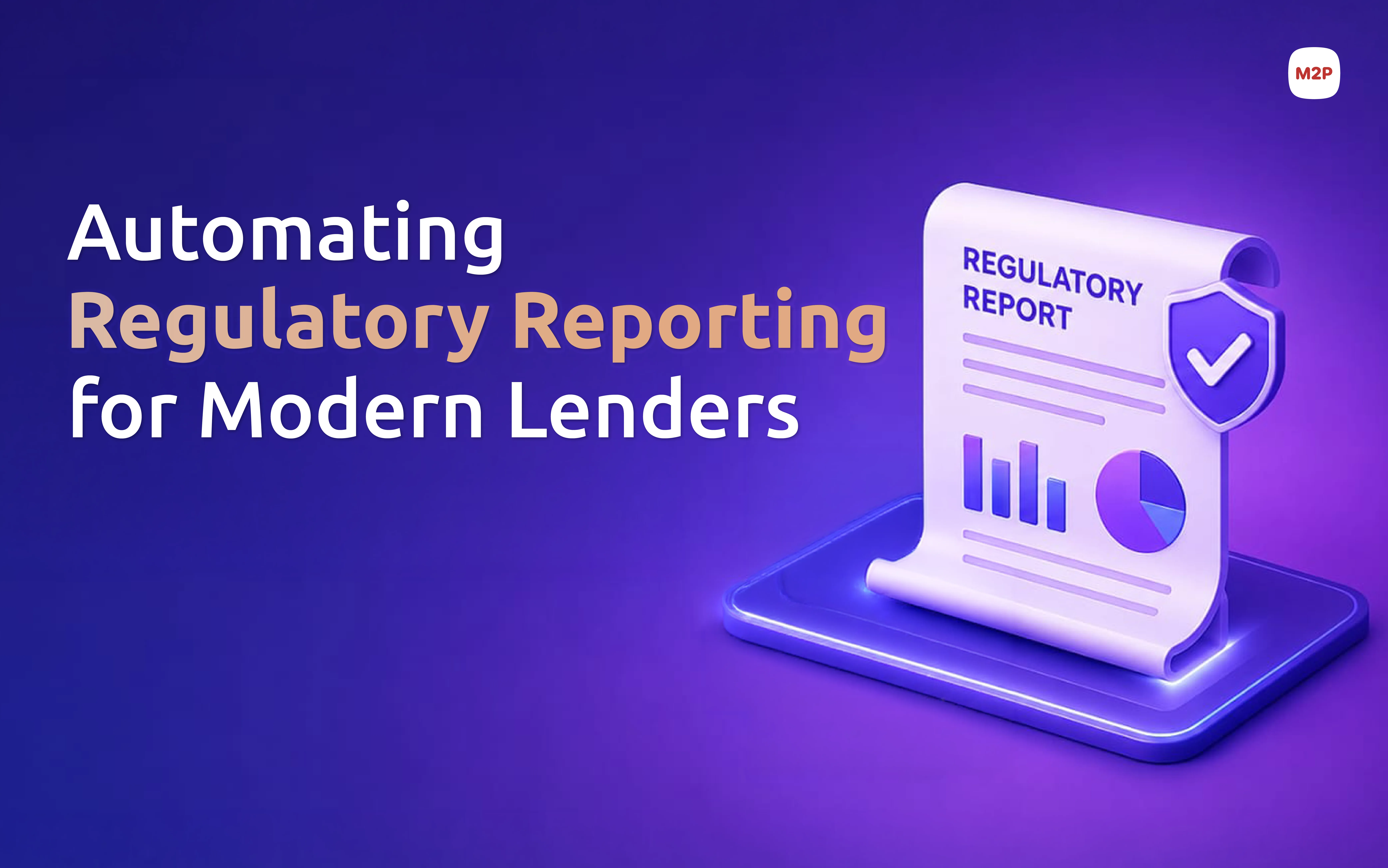
The financial services landscape is constantly evolving, bringing new opportunities and challenges for lenders. The race to innovate and launch new credit products is frequently met with an increasingly stringent regulatory environment. Today, launching a credit card or a lending product is only half the battle; the true test lies in maintaining airtight compliance, managing complex bureau interactions, and adhering to strict, time-sensitive reporting mandates.
This is where the architecture of your underlying technology becomes the defining factor between market leadership and operational gridlock. The role of a Technology Service Provider (TSP) has evolved from merely processing transactions to becoming the ultimate custodian of regulatory integrity. But not all TSPs are created equal. As lenders navigate a maze of moving parts and shifting mandates, the stark contrast between traditional legacy stacks and modern, automated TSP platforms has never been clearer.
Regulatory reporting is not a static obligation; it is a dynamic, high-stakes operational requirement. Every day, lenders are expected to process millions of data points, reconcile them accurately, and report them to relevant bureaus and regulatory bodies within strict timelines. Financial institutions must comply with hundreds of new or updated regulations continuously, underscoring the massive burden placed on banking infrastructure.
Historically, banks and lenders have relied on traditional technology stacks to handle these requirements. These legacy systems were built for a different era - an era of predictable batch processing and monolithic architecture. When tasked with the real-time, high-volume demands of today’s regulatory environment, these systems inevitably buckle.
Traditional stacks fundamentally operate with inherent capacity caps. They were designed to support a specific threshold of transactions and reporting requirements. When a lender scales its user base or when a regulatory body demands more granular, real-time data submission, the legacy system hits a wall. This results in delayed reporting, data discrepancies, and ultimately, heavy non-compliance penalties. The cost of maintaining these aging systems often eclipses the investment required to modernize them.
When a traditional stack reaches its threshold, human intervention becomes the messy, unreliable workaround. Operations teams are forced to manually extract data, format reports, and cross-reference bureau files to ensure accuracy. This manual patching is not just inefficient; it introduces a massive risk of human error.
In the lending ecosystem, a single data error can have cascading consequences. Misreporting a customer's credit utilization or failing to update a default status in real-time doesn't just damage the lender's reputation; it actively harms the consumer's financial standing and triggers regulatory audits. The traditional model, reliant on batch processes and manual oversight, is simply too fragile to sustain modern lending operations.
Enter the modern Technology Service Provider. A modern TSP is built from the ground up to view compliance not as an afterthought, but as a foundational pillar of its architecture. By leveraging cloud-native infrastructure, microservices, and API-first design, modern TSPs eliminate the rigid thresholds that cripple legacy systems.
The core differentiator of a modern TSP is its ability to automate regulatory reporting seamlessly, regardless of scale. Whether a lender is processing ten thousand transactions a month or ten million, the modern stack dynamically allocates resources to ensure that every data point is captured, formatted, and reported accurately and on time.
This scalability is crucial because the lending ecosystem involves a multitude of moving bodies. Lenders must interface with credit bureaus, central banks, fraud prevention networks, and internal audit teams. A modern TSP acts as an intelligent orchestration layer, ensuring that the right data flows to the right entity at the exact right moment.
One of the most complex aspects of lending compliance is bureau reporting. Credit bureaus require highly specific data formats and strictly enforce submission windows. If a lender misses a window or submits improperly formatted data, the file is rejected, creating a massive backlog of compliance debt.
Modern TSPs automate this entire lifecycle. They ingest transaction data in real-time, automatically map it to the required bureau formats, validate the data against predefined regulatory rules, and securely transmit the files via automated API calls or secure FTPs. If an anomaly is detected - such as a missing customer identifier or an illogical credit balance - the system automatically flags the exception for review before the report is generated, rather than waiting for a bureau rejection.
This proactive, automated approach ensures that time-sensitive mandates are consistently met. Lenders no longer have to worry about the operational heavy lifting of bureau reporting; the TSP handles it quietly and efficiently in the background.
At M2P Fintech, we understand that building a credit program requires more than just a slick user interface. It requires a robust, hyper-scalable backend that can absorb the complexities of modern compliance. Our M2P Credit Card Stack is engineered specifically to solve the regulatory and operational bottlenecks that lenders face today.
Here is how our CC Stack gives modern lenders an edge:
Cloud-Native Scalability: Built to handle unlimited transaction volumes without the artificial capacity caps found in legacy systems, allowing you to grow without operational friction.
Automated Regulatory Reporting: Seamless, real-time data formatting and submission that strictly adheres to the latest bureau mandates and compliance timelines.
Real-Time Reconciliation: Instantly cross-references transactions, fee assessments, and balances to eliminate intraday discrepancies and reduce compliance risks.
Dynamic Rule Engine: An agile architecture that easily adapts to shifting regulatory requirements, allowing you to implement mandate updates without extensive system overhauls.
API-First Integration: Ensures rapid deployment and unifies data flows across your broader banking ecosystem.
Unlike traditional monolithic core systems that struggle with modern reporting demands, our CC stack is inherently modular. When you leverage the M2P CC stack, you aren't just getting a transaction processing engine; you are gaining a fully automated compliance partner. Our platform seamlessly handles the heavy lifting of bureau reporting and regulatory data formatting in the background.
Because our architecture is cloud-native, there are no artificial thresholds. Whether you are launching a niche co-branded card or scaling a mass-market credit product, our stack adapts instantly, supporting all sorts of complex banking operations seamlessly. Furthermore, our system integrates effortlessly with wider operations. For lenders looking to unify their entire banking infrastructure, pairing our credit solutions with the M2P Core Banking platform creates an end-to-end ecosystem where data flows freely, accurately, and securely.
Regulations are not static. Governments and central banks frequently update their reporting mandates, requiring lenders to adjust their data capture and submission processes. In a traditional legacy environment, adapting to a new regulation requires months of custom coding, system downtime, and expensive IT consulting. It is a slow, painful process that diverts resources away from core business innovation.
A modern TSP transforms this dynamic. Because modern platforms are built on microservices, updating a reporting module does not require a complete system overhaul. When a regulatory body announces a new mandate, modern TSPs can swiftly deploy updates over the air. The reporting parameters are adjusted at the platform level, ensuring that all lenders operating on the TSP are instantly compliant with the new rules. This agility is a massive competitive advantage, allowing lenders to focus on product development rather than regulatory catch-up.
The financial landscape moves fast, and regulatory bodies move faster. Relying on traditional technology stacks with capped thresholds and manual workarounds is a strategic risk you can no longer afford to take. The future of lending belongs to those who view compliance not as a roadblock, but as a streamlined, automated operation powered by a modern TSP.
As your credit portfolio scales and the regulatory environment tightens, your tech stack needs to be your greatest asset, not your biggest liability. Don't let legacy infrastructure dictate your growth ceiling or leave you vulnerable to compliance failures while your competitors scale seamlessly.
Talk to us today to discover how the M2P CC Stack can future-proof your lending operations.
Follow us on LinkedIn and Twitter for insightful fintech bytes curated for curious minds like you.

Fintech is evolving every day. That's why you need our newsletter! Get the latest fintech news, views, insights, directly to your inbox every fortnight for FREE!